How ‘Grub Street’ came to refer to hack work.
From the 17th century onwards, Grub Street, in Moorgate, London, was inhabited by literary hacks.
Read More
“ad fontes!”
From the 17th century onwards, Grub Street, in Moorgate, London, was inhabited by literary hacks.
Read MoreUK, early 19th century—an imaginary street where people in difficulties, now especially financial ones, are supposed to reside—urban counterpart of ‘Dicky’s meadow’
Read More
UK, 1972—‘XXXX’: a euphemistic substitute for a four-letter swear word, usually ‘fuck’—it did not originally refer to the Australian lager Castlemaine XXXX
Read More
a realm of fantasy, dreams or impractical notions—1856 as ‘cuckoo-cloud-land’—from the name of the city built by the birds in ‘The Birds’, by Aristophanes
Read More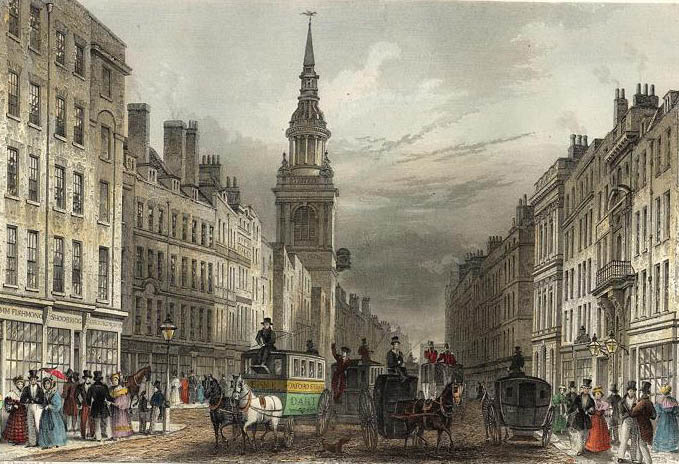
originally ‘pampered child’, later ‘town-dweller regarded as affected or puny’—origin uncertain—probably not the same word as ‘cokeney’, literally ‘cock’s egg’
Read Morefrom the legal formula ‘part and parcel’, in which both nouns meant ‘an integral portion of something’, the second noun merely reinforcing the first
Read More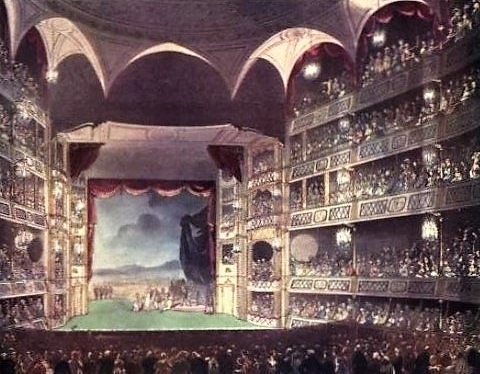
UK, 1784—elaborated on the archaic ‘on the spur’, which meant ‘in great haste’ and referred to the use of spurs to urge a horse forward
Read More
The spelling ‘ache’ (erroneously derived from Greek ‘ákhos’) instead of ‘ake’ is largely due to Samuel Johnson in A Dictionary of the English Language (1755).
Read More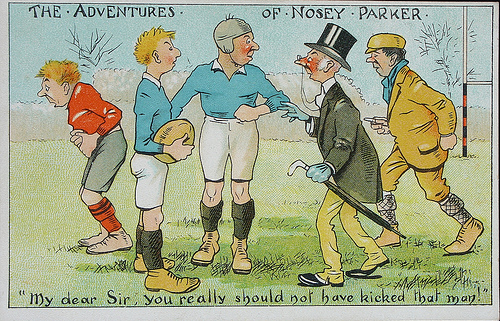
UK, late 19th century—apparently with reference to a probably fictitious individual named Parker, taken as the type of someone inquisitive
Read More18th century, of women’s clothes—‘bib’: a piece of cloth worn between throat and waist; ‘tucker’: a piece of lace or linen worn in or around the top of a bodice
Read More word histories