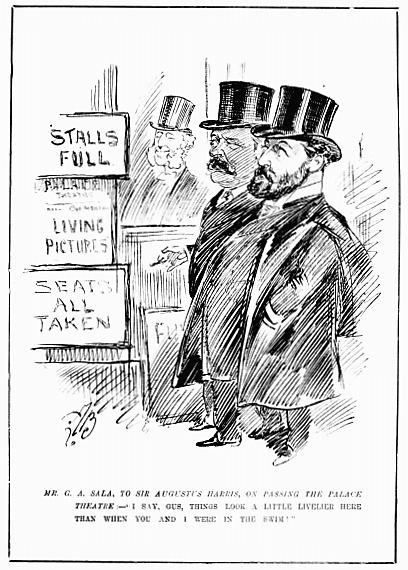
G. A. SALA, TO SIR AUGUSTUS HARRIS, ON PASSING THE PALACE THEATRE:—“I SAY, GUS, THINGS LOOK A LITTLE LIVELIER HERE THAN WHEN YOU AND I WERE IN THE SWIM!” — from The Entr’acte and Limelight (London) of 10th March 1894 (Augustus Harris (1825-73) was a British actor and theatre manager. George Augustus Sala (1828-95), was an […]
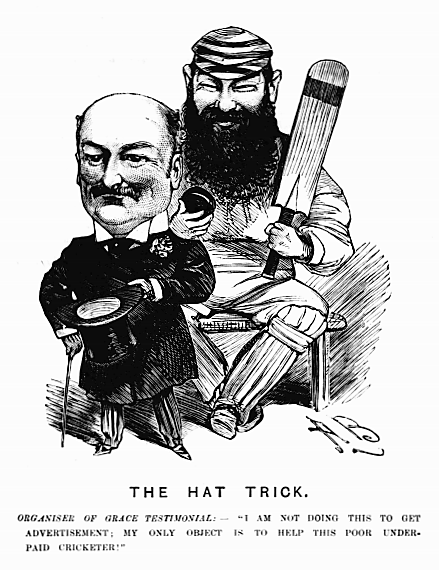
THE HAT TRICK. ORGANISER OF GRACE TESTIMONIAL: — “I AM NOT DOING THIS TO GET ADVERTISEMENT; MY ONLY OBJECT IS TO HELP THIS POOR UNDERPAID CRICKETER!” caricature from The Entr’acte & Limelight (London) – 22nd June 1895 In 1895, a testimonial fund was set up for W. G. Grace (1848-1915), the Grand Old Man […]
The phrase (as) happy (or jolly) as a sandboy means extremely happy or carefree—cf. also happy as a clam and happy as Larry. A sandboy was a boy hawking sand for sale. It seems that the earliest use of the word is The Rider and Sand-boy: a Tale, the title of a poem written by a certain Mr Meyler and published in Harvest-Home in 1805: […]
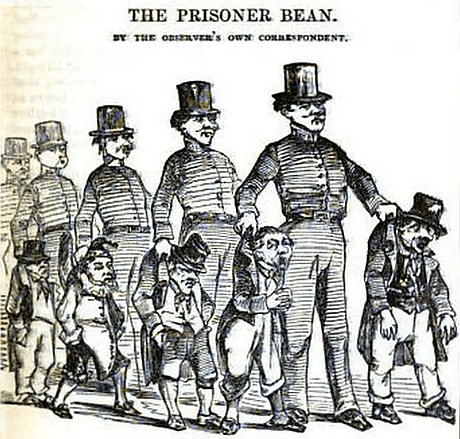
The term human bean is a humorous alteration or mispronunciation of human being, frequently used as part of an extended pun relating to beans. It is first recorded in Punch, or The London Charivari (1842): This little wretch is exciting the most intense interest, (Faugh!) and we have bribed the authorities in all directions to obtain information regarding him. It […]
“HUNS KILL WOMEN AND CHILDREN!” “TELL THAT TO THE MARINES!” First-World-War US recruiting poster by James Montgomery Flagg image: Disappearing Idioms This poster, which attracted a great deal of attention, portrays an angry-looking young man in the act of pulling off his coat as though he were anxious to get into a fight. The […]
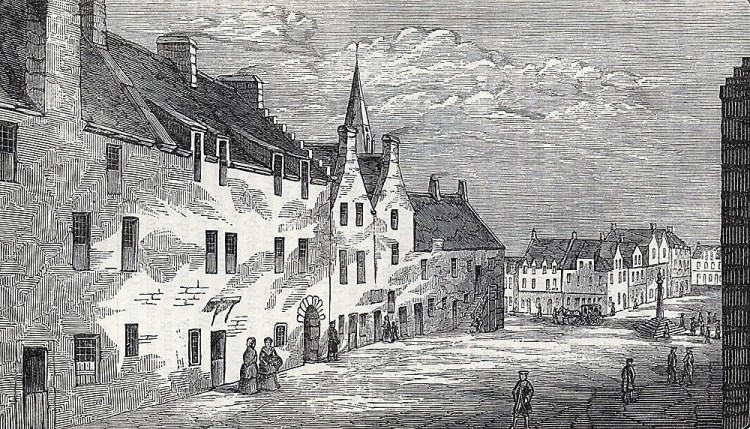
the Rotten-row in Glasgow, circa 1570 image: The Glasgow Story The street name Rotten Row occurs in many different towns. For example, The Caledonian Mercury (Edinburgh) of 10th December 1728 published the following advertisement: There is just come to Leith, a Parcel of fine Figs both in Casks and Frails [= baskets], […]
MEANINGS – the last part of something, especially when regarded as less important or interesting – British, informal: a cigarette end ORIGIN The obsolete adjective flag, attested in the late 16th century, meant flabby, hanging down. It was either an onomatopoeic formation or, via Middle French flac, from Latin flaccus, of same […]
A milliner is a person (generally a woman) who makes or sells women’s hats. But a Milliner was originally a native or inhabitant of Milan, a city in northern Italy. The word is first recorded in this sense in an Act of Parliament in 1449: That every Venician, Italian, Januey, Florentyn, Milener, Lucan, Cateloner, Albertyns, […]
MEANING the fourth estate: the press; the profession of journalism ORIGIN The first known user of the expression, designating the ordinary people, was the English author and magistrate Henry Fielding (1707-54) writing, under the pseudonym of Sir Alexander Drawcansir, Knt. Censor of Great Britain, in The Covent-Garden Journal of Saturday 13th June […]
MEANING the action of stealing goods from a shop while pretending to be a customer ORIGIN The slang use of the verb lift to mean to steal something from (a shop, etc.) seems to date back to the 16th century. One of the earliest attestations of this usage refers to the London […]



 word histories