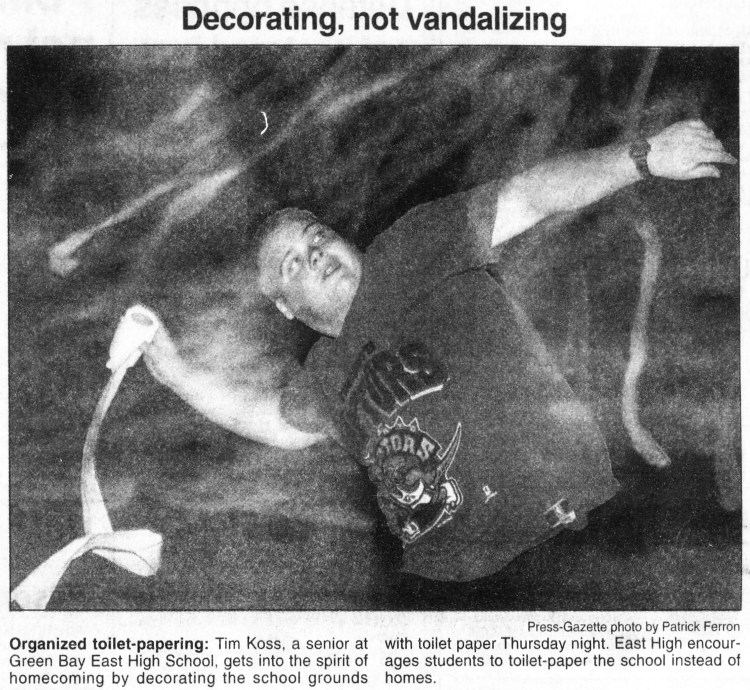
Decorating, not vandalizing Organized toilet-papering: Tim Koss, a senior at Green Bay East High School, gets into the spirit of homecoming by decorating the school grounds with toilet paper Thursday night. East High encourages students to toilet-paper the school instead of homes. from Green Bay Press-Gazette (Green Bay, Wisconsin) of 29th September 1995 […]
Four’s a Crowd.—A merry, irresponsible farce that dips frequently into pure crazy comedy. For this they have chosen to give Errol Flynn and Olivia de Havilland a “break” from their usual story book hero and heroine types. These two lovely young people do very well, but I cannot think that crazy comedy suits them best. […]
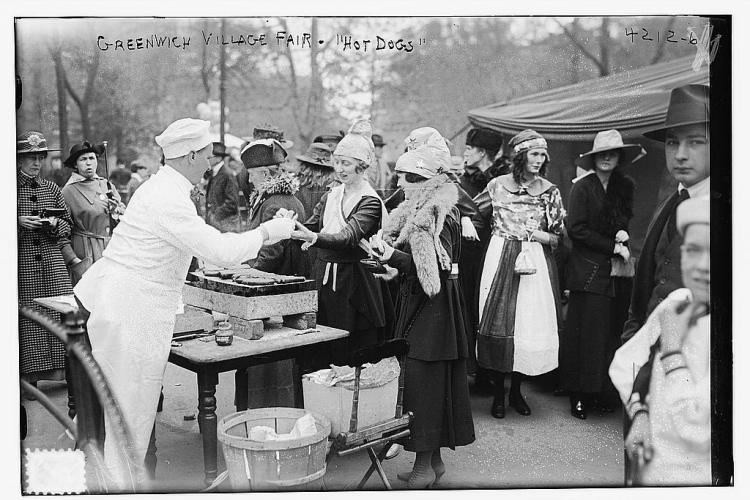
Greenwich Village Fair – “Hot Dogs” – June 1917 photograph: Library of Congress The term hot dog denotes a sausage, especially a frankfurter, served hot in a long roll split lengthways. In US slang, the noun dog has been used to denote a sausage since the late 19th century. This usage is first recorded […]
In the United Kingdom, especially in the mid-1950s, a Teddy boy was a young man characterised by a style of dress and appearance held to be characteristic of Edward VII’s reign (1901-10), typically a long velvet-collared jacket, drainpipe trousers and sideburns (Teddy is a pet form of Edward (VII)). The term first appeared in print […]
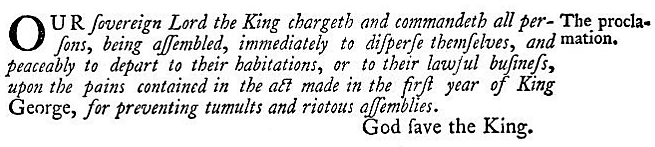
Our sovereign Lord the King chargeth and commandeth all persons, being assembled, immediately to disperse themselves, and peaceably to depart to their habitations, or to their lawful business, upon the pains contained in the act made in the first year of King George, for preventing tumults and riotous assemblies. […]
Like Jack, pet form of John, Joe, familiar abbreviation of Joseph, is colloquially used as a generic term for a lad, a fellow, a chap. And, like Joe Blow, Joe Citizen, Joe Doakes and Joe Six-Pack in American English, Joe Soap and Joe Bloggs in British English are generic names for an average man. —Cf. also Onion Johnny. These are the earliest […]
The colloquial terms bag of mystery and mystery bag denote a sausage, a saveloy. The British lexicographer John Stephen Farmer (1854-1916) gave the following explanations in Slang and its Analogues Past and Present ([London]: Printed for subscribers only, 1890): Bags of mystery (common).—Sausages and saveloys are so called—from the often mysterious character of their compounds. Presumably composed […]
The phrase money for old rope has various meanings: a profitable return for little or no trouble; a very easy job; a person or thing easy to profit from or to beat. The earliest occurrence of this phrase that I have found is from Driffield Coursing Club. “Peter Delmas” in the genial crowd, published in The Daily Mail (Hull, Yorkshire, England) […]
A New Song, sung by Mr. Champness in Harlequin’s Invasion from The Universal Magazine of Knowledge and Pleasure – March 1760 The phrase heart of oak denotes a person with a strong, courageous nature, especially a brave and loyal soldier or sailor, and a courageous or valorous spirit. Its literal meaning is the heartwood of the oak. The heartwood […]
Frequently used in the passive, the phrase to sell someone a pup means to swindle someone, especially by selling something of little worth on its supposed prospective value. And to buy a pup means to be swindled. The expression is first recorded in 1901. That year, several newspapers gave its most likely origin; for example, the column From Day to Day of The Daily […]




 word histories