a Pepysian phrase: ‘and so to bed’
phrase popularised by its frequent use in the diary (1659-69) of Samuel Pepys (1633-1703)—not peculiar to him, however, as it was used for example by Philip Massinger in 1624
Read More
“ad fontes!”
phrase popularised by its frequent use in the diary (1659-69) of Samuel Pepys (1633-1703)—not peculiar to him, however, as it was used for example by Philip Massinger in 1624
Read MoreUK, early 18th century—addressed to one who, saying ‘coming!’ (i.e., ‘in a minute’), takes a long time to arrive—used by extension of anything that is being delayed
Read Moresaid to console a child choking over his or her food—UK, obsolete—first recorded in A Complete Collection of Genteel and Ingenious Conversation (1738), by Jonathan Swift
Read More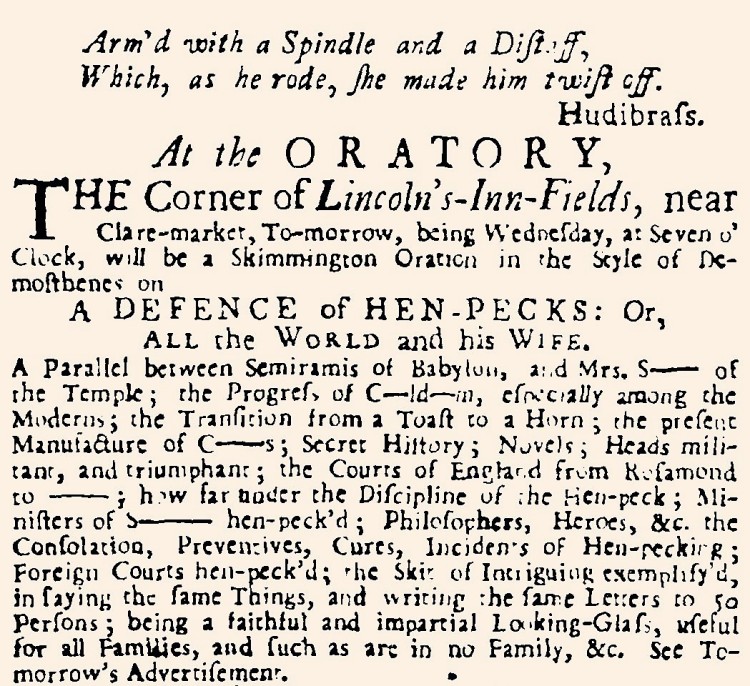
a large group of people of various kinds—UK, 1730
Read More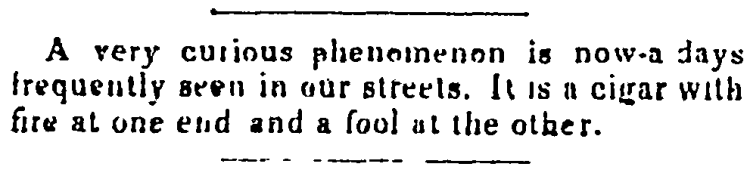
a cigar or a cigarette—USA, 1841—probably patterned on phrases such as ‘a fool at one end and a maggot at the other’, describing a fishing rod
Read More‘upstairs to bed’—UK, 1923: title of a song by Nixon Grey—‘Bedfordshire’ jocular extension of ‘bed’ (1665)—‘the wooden hill’ metaphor for ‘the stairs’ (1856)
Read Moreearly 18th century, in Jonathan Swift’s ‘Polite Conversation’—from the folk belief that one shudders when somebody walks over the site of one’s future grave
Read More
USA, 1874, as ‘a little tin Jesus on wheels’—in reference to tin as a base metal, ‘tin’ is used figuratively in the senses ‘petty’, ‘worthless’, ‘counterfeit’
Read More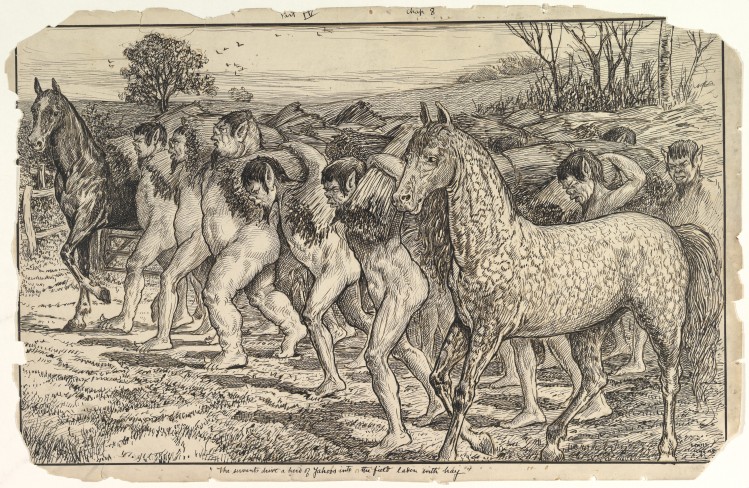
‘yahoo’: rude, noisy or violent person—word invented by Jonathan Swift (1667-1745) as the name of a race of brutish creatures resembling men in Gulliver’s Travels (1726)—came to be applied to the orang-utan
Read MoreItalian translation of Latin ‘in pectore’ (‘in the breast’, ‘in the secret of the heart’)—when a pope announces that he has appointed a cardinal whom he reserves ‘in petto’, it means that he will reveal this cardinal’s name later
Read More word histories