meaning, origin and early instances of ‘to lie doggo’
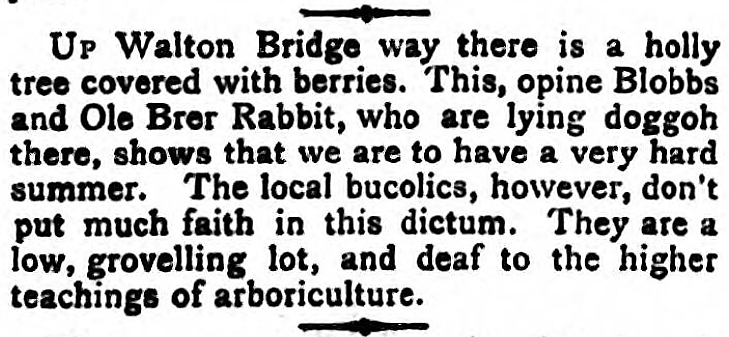
UK, 1882—to remain motionless and quiet; to keep a low profile—probably from ‘dog’ and suffix ‘-o’, with allusion to the characteristically light sleep of a dog
Read More
“ad fontes!”
UK, 1882—to remain motionless and quiet; to keep a low profile—probably from ‘dog’ and suffix ‘-o’, with allusion to the characteristically light sleep of a dog
Read Moresexual intercourse conducted quickly and without tenderness—originally used (USA, 1950) in the generic, neutral sense of ‘quickness’
Read More‘robe’ originally denoted something that has been robbed—French ‘voler’ (‘to fly’) has come to mean ‘to steal’ via falconry
Read More
1893—to allow someone to get on with their task—originated in Wales with reference to fair-mindedness in sports
Read MoreUK, 1920—to commit a blunder; to make a tactless or indiscreet remark—meaning obscure in some early uses
Read MoreThe image of one’s bread getting or being buttered has long been used to denote getting or having benefits, advantages.
Read MoreAttested in 1761, ‘as the crow flies’ originally referred to the interior of a country; it did not originate in a practice of early navigation at sea.
Read MoreUSA, 1837—The image is of a racoon that has been treed but the construction ‘gone + animal name’ has more generally been used in phrases of same sense.
Read Moreoriginally a kind of horse chase in which the second horse had to follow the course of the leader, like a flight of wild geese
Read MoreUK, 1793—a horse race across a stretch of open countryside, with a church steeple in view as goal
Read More word histories