Old English ‘werewulf’ (first element identified with Old English ‘wer’, ‘man’) first used for ‘wolf’ to denote a person serving Satan (cf. Gospel of Matthew “Beware of false prophets, who come to you in sheep’s clothing, but inwardly they are ferocious wolves”)
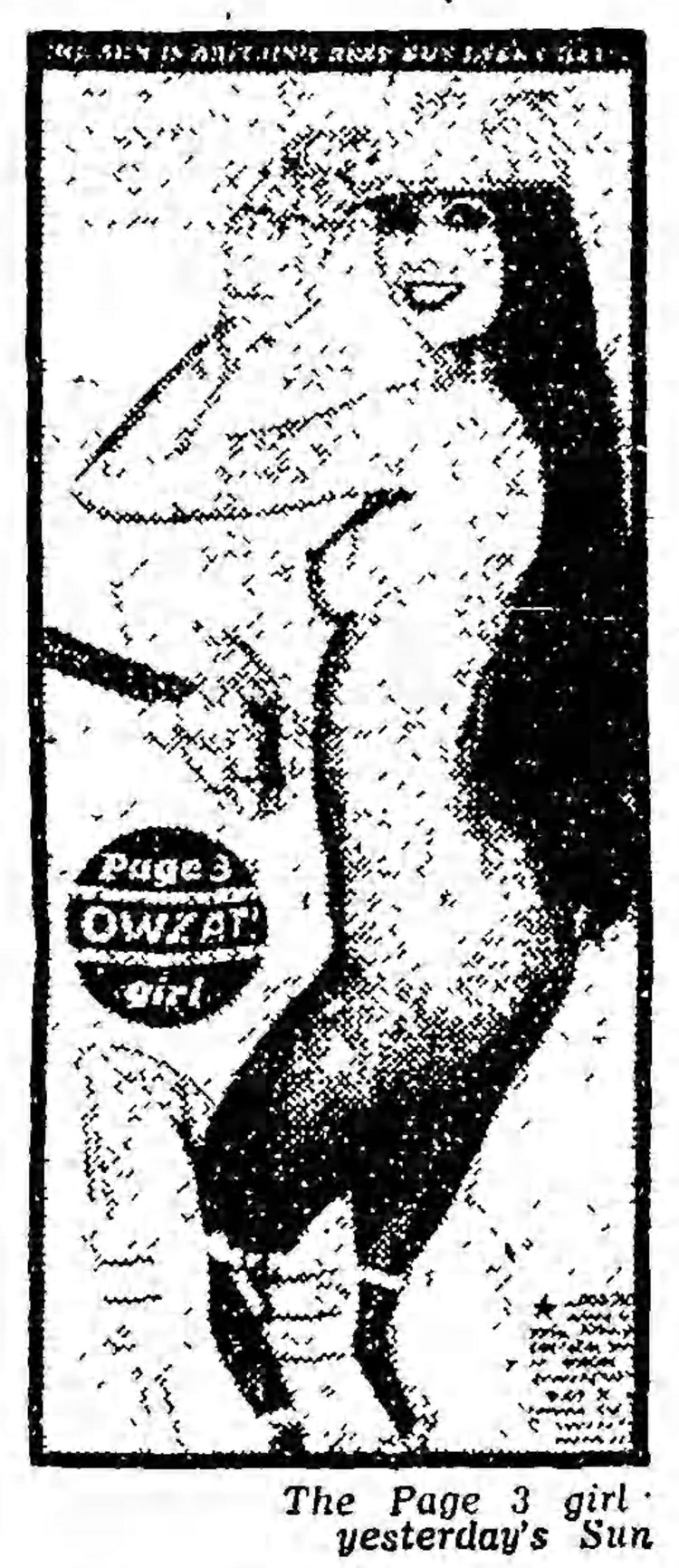
British English—‘Page Three’, or ‘Page 3’: a feature which appeared daily on page three of the British tabloid The Sun (London), and included a pin-up picture of a topless or nude young woman; this feature first appeared on 17 November 1970.
A diminutive of ‘pūpa’ (‘a girl’, in transferred use also ‘a doll’), the Latin feminine noun ‘pūpilla’ came to also denote ‘the pupil of the eye’ on account of one’s own reflection seen when looking into somebody’s eye—the same metaphor underlies ‘to look babies in somebody’s eyes’.
From Japanese ‘taikun’, ‘tycoon’ was originally the title by which the shogun of Japan was described to foreigners. The current sense originated in the Japanese Embassy to the United States in 1860, not from the use of ‘tycoon’ as a nickname of Abraham Lincoln.
In British slang, the noun ‘piss-up’ denotes ‘a heavy drinking bout’, and the phrase ‘couldn’t organise a piss-up in a brewery’ and variants mean ‘is’, or ‘are’, or ‘am’, ‘incapable of organising the simplest event, task, etc.’—phrase first recorded in 1980.
from army use on the Western Front during World War One: ‘cootie’, ‘body louse’, ‘cooty’, ‘infested with lice’, ‘coot’, ‘louse’, probably ultimately refer to the aquatic bird called ‘coot’, reputed to be lice-infested
some characteristic slang creations of the British, U.S. and French soldiers during World War One, as recorded in ‘Trench Talk’, published in Everybody’s Magazine (New York) of January 1918
18th century—origin unknown—perhaps originally imitative and comparable to, or derived from, ‘tantara’, denoting the sound of a trumpet, hence an uproar—or from obsolete French ‘trantran’, synonym of ‘tantara’
‘queen’s’, or ‘king’s’, ‘cushion’: a seat made by two people who cross arms and hold each other’s hands to form a support for another person—Scotland and northern England, 19th century

 word histories