denotes effrontery—‘front’ denotes self-assurance, but the word that follows ‘than’ puns on ‘front’ in the sense of the façade of a building, a long seafront, etc.—also denotes a well-endowed woman, with reference to ‘front’ in the sense of a woman’s bust
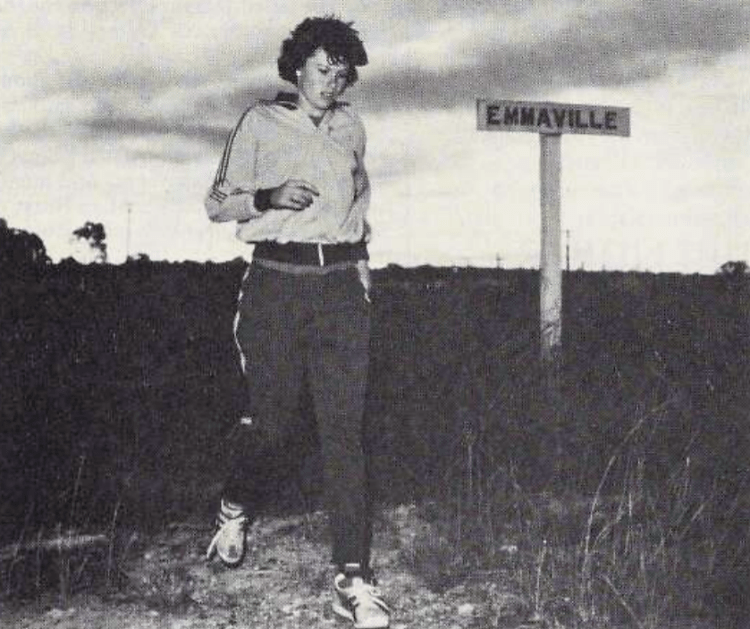
Australia, 1976—nickname of Australian sprinter Debbie Wells (born 1961), who is from Emmaville, in New South Wales—alludes jocularly to ‘express (train)’, denoting a train that stops at few stations and travels quickly
Australia, 1981—used by some Aborigines of those who are considered to have betrayed their Aboriginal identity in order to be accepted into the white Australian society—the image is that (like the coconut, dark on the outside, but white on the inside) those Aboriginal ‘betrayers’ are outwardly black, but inwardly white
Australia, 1830—refers to the Aboriginal belief that light-skinned persons are reincarnations of dead Aborigines—extended forms: ‘jump up white fellow, plenty of sixpence’ and ‘go down blackfellow and jump up whitefellow’
UK 1945: ‘as lucky as the pox doctor’s clerk’: very lucky—UK 1954, ‘to look like a pox doctor’s clerk’, Australia 1957, ‘done up like a pox doctor’s clerk’: dressed nattily but in bad taste
Australia, 1902—to be extremely weak or incompetent at fighting; to be completely ineffectual or inept—‘to fight one’s way out of a paper bag’: to accomplish a very easy task
Australia, 1967—Redfern: a train station positioned one stop before Sydney Central Station—British-English regional variations include, in Newcastle upon Tyne: ‘to get out at Gateshead’
UK and USA, 1908: applied to a pair of trousers much too large for the wearer—later also applied to small cars and to socks much too large for the wearer
conveys derisive self-congratulation for an action that the speaker has done from a sense of duty rather than for pleasure—from a line uttered by Charles Laughton in the 1933 film The Private Life of Henry VIII
used to rebuke an unrealistic conditional—USA, 1808: ‘if my aunt had been my uncle, what would have been her gender?’—France, 1843: ‘si ma tante était un homme, ça serait mon oncle’ (‘if my aunt were a man, that would be my uncle’)


 word histories