‘in the pudding club’: meaning and origin
UK, 1890—pregnant—refers to “the bulging puddinglike appearance of a pregnant woman”
Read More
“ad fontes!”
UK, 1890—pregnant—refers to “the bulging puddinglike appearance of a pregnant woman”
Read More
UK, 1955—‘cobblers’, short for ‘cobbler’s (or cobblers’) awls’, is rhyming slang for ‘balls’, i.e., ‘testicles’, and figuratively ‘nonsense’, ‘rubbish’
Read MoreUSA, 1871—The phrase ‘a whale of a (good) time’ denotes a hugely enjoyable time, and alludes to the enormousness of whales.
Read More
African-American, 1966—different things please or satisfy different people—‘stroke’ denotes a comforting gesture of approval or congratulation, and, by extension, a flattering or friendly remark
Read More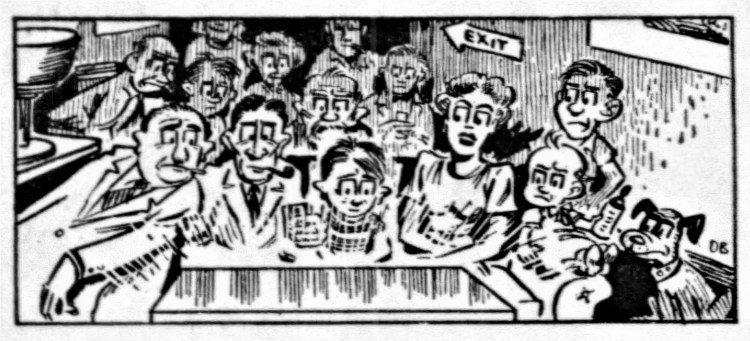
‘square eyes’ 1955: eyes fancifully imagined as made square by habitual or excessive television viewing; a person characterised as watching too much television—‘square-eyed’ 1953: affected by, or given to, excessive viewing of television
Read More
Australia, 1953—used of an extremely lazy person—refers to the artificial respirator that kept polio patients alive by “breathing” for them
Read MoreAustralia, 1981—the ideology of the Australian Labor Party’s left wing, “for whom the ultimate test of a policy is the feeling of personal virtuousness to be derived from its espousal”—Labor politician James McClelland claimed to have coined this phrase
Read MoreBritish and Irish English, 1833—denotes qualified pleasure—also: ‘to give [someone] a poke in the eye (with a — stick)’, meaning to deprecate [someone]—from ‘a poke in the eye’, denoting something undesirable
Read MoreUK, 1965—in sports such as rugby and soccer: a pass to a player likely to be tackled heavily as soon as the ball is received—the implication is that the player who receives the ball may end up in hospital, or, at least, be injured
Read MoreUSA, 1936—the facts about sexual reproduction, especially as explained to a child—when this phrase appeared, ‘birds’ and ‘bees’ had long been commonly paired in literary allusions
Read More
