‘stickybeak’: meanings and origin
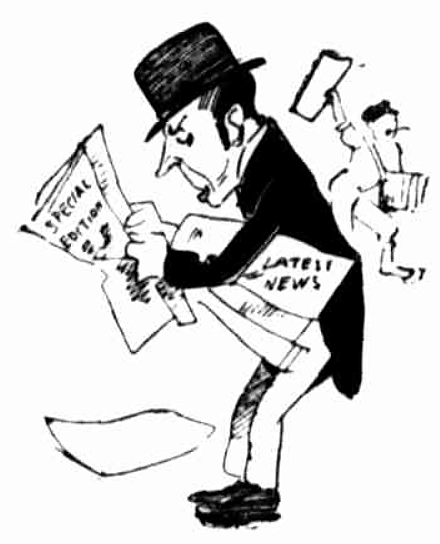
Australia—1914: the nose of an overly inquisitive person—later: an overly inquisitive person, who pries into the affairs of others—hence used as a verb meaning ‘to pry’, ‘to snoop’
Read More
“ad fontes!”
Australia—1914: the nose of an overly inquisitive person—later: an overly inquisitive person, who pries into the affairs of others—hence used as a verb meaning ‘to pry’, ‘to snoop’
Read MoreAustralia, 1893—refers to extreme thirst or to extreme dryness—popularised by the Australian short-story writer and balladist Henry Lawson (1867-1922)
Read MoreAustralia, 1901—refers to rough penmanship—alludes to Clancy of the Overflow (originally published in The Bulletin, Sydney, on 21st December 1889), by the Australian poet Andrew Barton Paterson
Read More1842—The noun ‘patter’ denotes the sound of light footfall, and the phrase ‘the patter of tiny feet’, and its variants, denote the presence of one or several young children, or the imminent birth of a child.
Read MoreUK, 1982—denotes a headbutt—alludes to the reputation for violence accorded to some parts of Glasgow, a city in west-central Scotland
Read MoreAustralia, 1981—very dry—alludes to the alleged poor personal hygiene of the British—here, the Australian noun ‘Pommy’ designates a British person
Read MoreUK, 1830—a happy or positive attitude that fails to notice negative things, leading to a view of life that is not realistic
Read MoreUK, 1857—This phrase was originally used by children to express or encourage an attitude of indifference to taunts, insults or other verbal abuse.
Read MoreUSA, 1959—a very tidy, well-organised person—a blend of the adjective ‘neat’ and of the noun ‘beatnik’—originally occurred chiefly in contrast to ‘beatnik’
Read MoreUK, 1993—meaning: influenced or determined by a person’s locality or postal address—in phrases such as ‘postcode discrimination’—frequently with reference to the unequal provision of healthcare
Read More
