Australia, 1965—a panacea; a source of comfort; also indicates the need for a rest to settle down—originated in ‘A Cup of Tea, a Bex and a Good Lie Down’ (1965), a satiric revue by John McKellar—‘Bex’ was a proprietary name for a type of analgesic
USA, 1982—a catchy song or melody that keeps repeating in one’s mind, especially to the point of irritation—loan translation from German ‘Ohrwurm’—original meaning (1598): an earwig
North-American colonies, 1737—to walk in a swerving, unstable manner—especially used of an inebriated person’s gait—refers to ‘Virginia fence’, denoting a fence consisting of sets of wooden rails that interlock in a zigzag fashion
There have been, since the early 20th century a number of colourful variants of the U.S. phrase ‘as busy as a one-armed paperhanger’—for example, in Australian English, ‘as busy as a one-armed taxi-driver with crabs’ and ‘as busy as a brickie in Beirut’.
USA, 1963—a female police officer or a female traffic warden—puns on ‘dick’, slang for a man’s penis, and the name of Dick Tracy, a comic-strip detective created in 1931 by the U.S. cartoonist Chester Gould
informal and often humorous: denotes the explicit or most intimate details of something—originally (USA, 1859) referred to accounts or representations of acts of violence and bloodshed
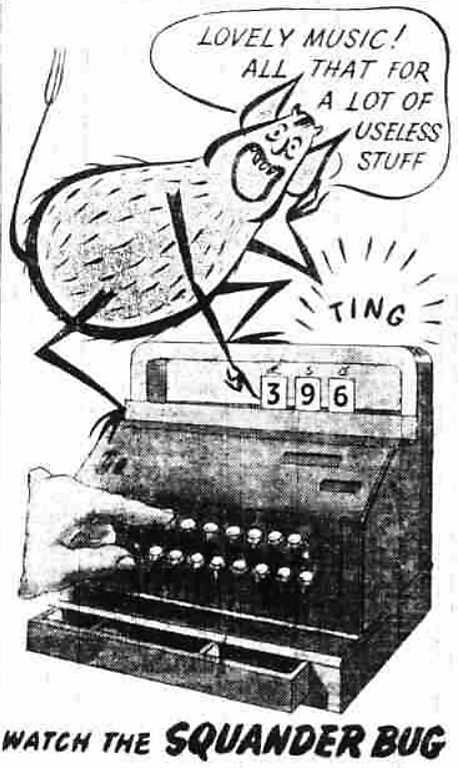
1943—a devilish insect symbolising reckless extravagance and waste—introduced by the National Savings Committee in a government publicity campaign promoting economy—hence: one who is profligate with money or resources
Scotland, 1825 (as ‘bane idle’)—England, 1839—utterly lazy or indolent—‘bone’ seems to be used as an intensifier with adverbial force in the sense ‘through to the bone’, i.e., ‘deeply and fundamentally’
USA, 1927—denotes male vigour, especially sexual—with wordplay on ‘penis’—interestingly, via an alteration of the Latin diminutive ‘pēnĭcillus’, denoting literally a little tail, hence a painter’s brush or pencil, ‘pencil’ is derived from Latin ‘pēnis’, denoting literally a tail, hence the penis
USA (New England), 1868—alternately sunny and cloudy conditions usually indicate rain—the adjective ‘shet’ is a variant of ‘shut’—it was perhaps in order to provide a rhyme for the adjective ‘wet’ that the variant ‘shet’ was chosen in the proverb


 word histories