a woman who had no qualities other than attractiveness, with connotations of low intelligence, or of flightiness, or of low social status and poverty—second half of the 19th century, chiefly in stories by women writers
to speak the plural noun ‘prunes’ aloud in order to form the lips into an attractive shape—UK, 1846—particularly associated with portrait photography; also with kissing
UK, 1971—a pun on ‘Kensington Gore’, the name of a thoroughfare in London, and on the noun ‘gore’, denoting blood shed from a wound—it is unclear whether ‘Kensington Gore’ (as applied to artificial blood) was originally a trademark
a tall person—Australia, 1968, in the stage play Norm and Ahmed, by Alexander Buzo—gained currency from occurring in the film Gallipoli (1981), scripted by David Williamson
depression suffered by a mother in the period following childbirth—USA, 1940, in Expectant Motherhood, by Nicholson Joseph Eastman—variant: ‘after-the-baby blues’ (USA, 1940)
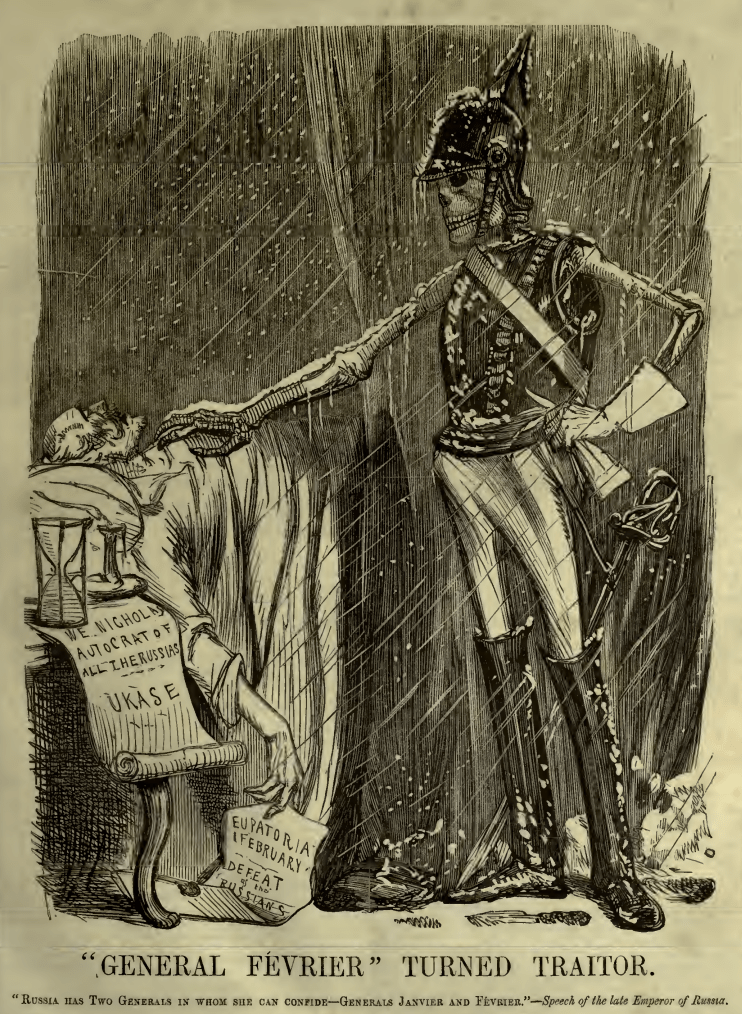
personify January and February as army commanders, especially in reference to winter as detrimental or destructive to a military campaign—apparently coined by Russian Prince Alexander Menshikov in 1855, during the Crimean War
suicide committed by a person, especially a child or young adult, as a result of being bullied—blend of the nouns ‘bully’ and ‘suicide’—coined since 2001 on separate occasions by various persons, independently from one another
The noun ‘dunny’ denotes a toilet, especially an outside toilet. This noun has been used in various phrases expressing notions such as conspicuousness, loneliness, ill luck, etc.
UK, 1866—used as an observation, a reproof or a warning implying over-cleverness—plays on two meanings of the adjective ‘sharp’: a) literal meaning: ‘cutting’; b) figurative meaning: ‘keen-witted’
diarrhoea suffered by travellers, especially in Egypt—USA, 1973—does not seem to have been coined after the synonymous ‘Montezuma’s Revenge’—may somehow allude to the legendary curse of the pharaohs