The noun pastis designates an aniseed-flavoured aperitif, while pastiche, or pasticcio, denotes a work of art that imitates the style of another artist or period and a work of art that mixes styles, materials, etc. Unlikely as it may seem, these words are doublets, or etymological twins: although they differ in form and meaning, they go […]
The French term foie gras, from foie, liver, and gras, fat, fatty, denotes the liver of a specially fattened goose or duck prepared as food. Short for pâté de foie gras, it also denotes a smooth rich paste made from fatted goose or duck liver. Its first known use in English is in The Fudge […]
cover of The Great Panjandrum Himself (1885), a picture book based on the text attributed to Samuel Foote, by the English artist and illustrator Randolph Caldecott (1846-86) – photograph: Aleph-Bet Books MEANING a pompous self-important official or person of rank ORIGIN The word is supposed to have been coined in […]
The phrase caviar to the general is used to denote a good thing unappreciated by the ignorant (here, the general refers to the multitude). It is from The Tragicall Historie of Hamlet, Prince of Denmarke (between 1599 and 1602), by the English poet and playwright William Shakespeare (1564-1616): (Quarto 2, 1604) – Hamlet: Come giue vs a tast of your quality, come […]
The Cheshire cat is now largely identified with the character in Alice’s Adventures in Wonderland (1865), by the English writer Lewis Carroll (Charles Lutwidge Dodgson – 1832-98): “Please would you tell me,” said Alice, a little timidly, for she was not quite sure whether it was good manners for her to speak first, “why your […]
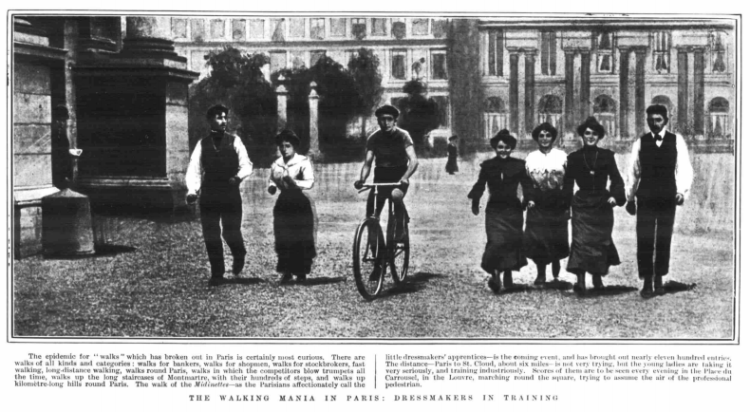
Phonetically and semantically similar to milliner, the French word midinette was defined as “a milliner’s female assistant, especially in Paris” in the 1933 Supplement to the New English Dictionary (as the Oxford English Dictionary was known). However, while milliner literally means a Milanese, a native or inhabitant of Milan, midinette is a portmanteau word, composed […]
The noun galaxy is from post-classical Latin galaxias, denoting the Milky Way, from Hellenistic Greek γαλαξίας (= galaxias), short for γαλαξίας κύκλος (= galaxias kuklos), milky circle, from ancient Greek γάλα/γαλακτ- (= gala/galakt-), milk. Originally therefore, galaxy, often with the and capital initial, denoted the Milky Way, that is, the diffuse band of light stretching across […]
The adjective piping hot is used to refer to very hot food or liquid, usually when served. It referred originally to the hissing of viands in the frying pan, the verb pipe meaning, in this case, to make a whistling sound. This adjective is first attested in The Miller’s Tale, by the English poet Geoffrey […]
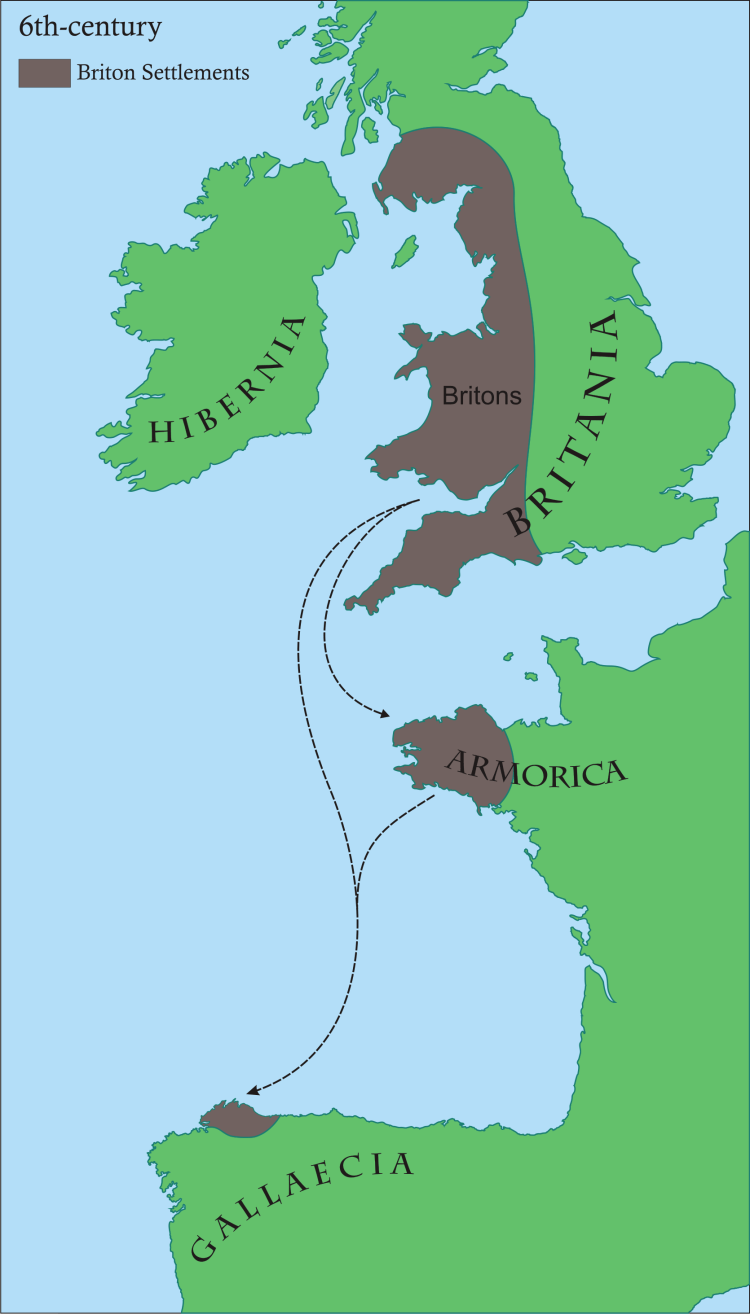
Briton settlements in the 6th century – settlements of the Angles, Saxons and Jutes in Britain, circa 600 In the following, Briton will refer to the Celtic Brittonic-speaking peoples who inhabited Britain south of the Firth of Forth, and who, following the arrival of the Anglo-Saxons in the 5th century, gradually retreated until the […]
The Anglo-Saxons were the Germanic inhabitants of England before the Conquest, i.e. the invasion and assumption of control by William of Normandy in 1066. Known as William the Conqueror, William I (circa 1027-87) defeated Harold II at the Battle of Hastings. He introduced Norman institutions and customs, including feudalism, and instigated the Domesday Book. […]


 word histories