meaning and origin of ‘to be unable to run a whelk stall’

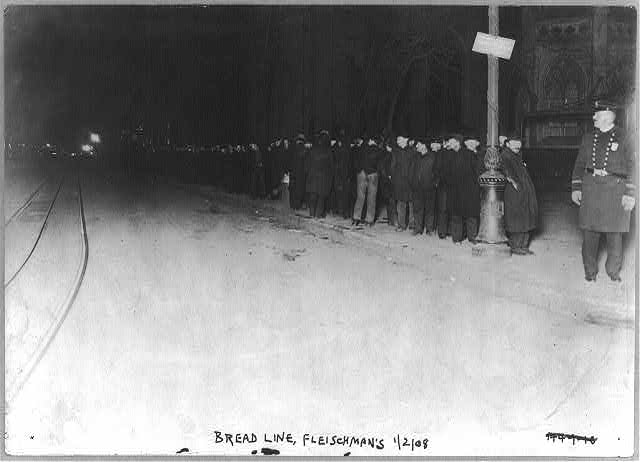
‘to be unable to run a whelk stall’ and variants: to be incapable of managing the simplest task or enterprise—coined by John Elliot Burns (1858-1943), English trade unionist and politician, in the 1894 New Year’s address to his constituents of Battersea

Read More

origin of ‘Dutch treat’ and ‘to go Dutch’

USA—‘to go Dutch’ (1907): to have every participant pay their own expenses, or share expenses equally—via ‘to go Dutch treat’ (1887), from ‘Dutch treat’ (1873): a meal, etc., at which each participant pays their share of the expenses—from a German practice

Read More

origin of ‘doggy bag’ (to take home leftover food)

USA, 1950s—The noun ‘doggy (or doggie) bag (or pack)’ denotes a bag, provided on request by the management of a restaurant, in which a diner may take home any leftovers; apparently, these leftovers were originally intended for the diner’s pet dog.

Read More

‘maelstrom’ (a whirlpool off the west coast of Norway)

late 16th century—from early modern Dutch ‘maelstrom’ (now ‘maalstroom’)—originally a proper name designating a powerful whirlpool in the Arctic Ocean, off the west coast of Norway, which was formerly supposed to suck in and destroy all vessels within a wide radius

Read More

origin of ‘to have, or to get, egg on one’s face’

USA, 1946—‘to have, or to get, egg on one’s face’: to be, or to get, embarrassed or humiliated by the turn of events—refers either to having eggs thrown at one’s face or to yolk stains left on the face after the careless eating of a soft-boiled egg

Read More

origin of ‘there is no such thing as a free lunch’

USA, 1939—‘there is’, or ‘ain’t’, ‘no such thing as a free lunch’: everything inevitably involves a cost of some kind—literal meaning of ‘free lunch’ (first half of the 19th century): a lunch provided free of charge in a bar, saloon, etc., as a means of attracting customers

Read More

the history of ‘burnsides’, ‘sideburns’ and ‘sideboards’

After Ambrose Burnside, Union general in the U.S. Civil War, ‘burnsides’ (1866) denotes thick side whiskers worn with a moustache and clean-shaven chin; on the pattern of ‘side whiskers’, it was altered to ‘sideburns’ (1875), itself altered to ‘sideboards’ (1882).

Read More