It has been said that ‘(as) right as a trivet’ an alteration of ‘(as) tight as a rivet’. But the latter phrase, which postdates the former, originally meant ‘extremely tight’, not ‘thoroughly or perfectly right’.
chiefly Australian, 20th century—formula for estimating the size of rural holdings—also used figuratively of someone who talks boastfully without acting on their words
someone or something that is fashionably or artfully dishevelled or dilapidated—in early use: someone or something whose dishevelment or dilapidation is unintentionally attractive or fashionable—USA, 1901
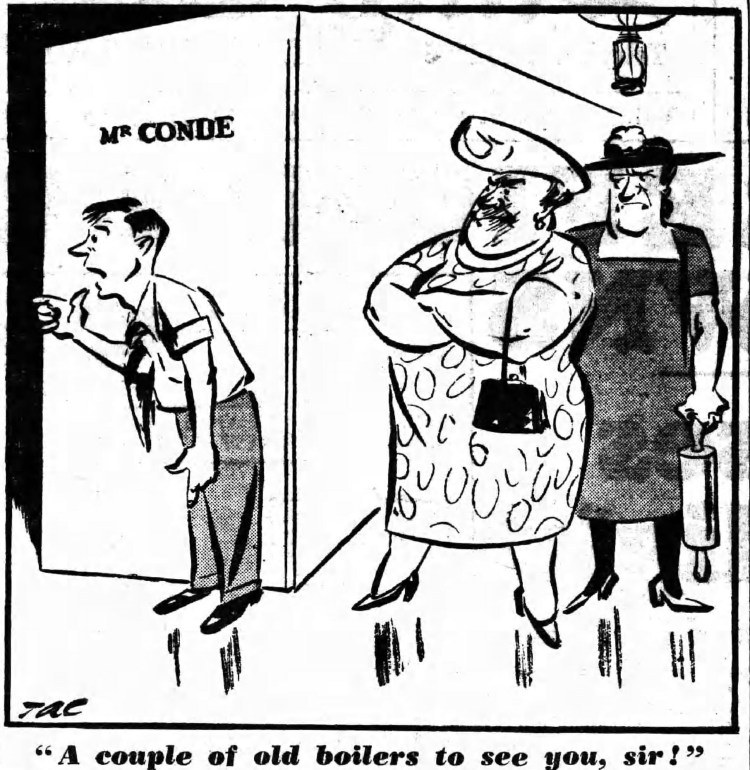
Australia, 1950—UK, 1962—derogatory and offensive: a middle-aged or elderly woman, especially one who is unattractive or unfeminine—refers to ‘boiler’, i.e., a tough old chicken for cooking by boiling
UK & Ireland—a shop that sells a wide range of goods at low prices, typically one pound or less—hence also: of the type or quality found in a pound shop, cheap, second-rate
refer to the teenage years regarded as an age at which jeans are often worn—USA, from 1946 onwards—punningly after, respectively, ‘teenage’, ‘teenager’ and ‘teenaged’
UK, 1981—a pair of spectacles with an oversized frame of a style that was fashionable in the 1980s—refers to the spectacles worn by Deirdre Barlow, a fictional character in the soap opera Coronation Street
UK, 1839—France, 1843—the best people in a group, or the best type of a particular thing—a borrowing from French ‘crème de la crème’, literally ‘cream of the cream’
USA, 1913: a minority group regarded as eccentric, extremist or fanatical, or simply stupid—but originally, USA, 1874: a woman or girl’s hairstyle in which the front is cut straight and square across the forehead
USA, 1927: a minority group regarded as eccentric, extremist or fanatical, or simply stupid—but originally, UK, 1873: a woman or girl’s hairstyle in which the front is cut straight and square across the forehead




 word histories