‘jean-age’, ‘jean-ager’ and jean-aged’: meaning and origin
refer to the teenage years regarded as an age at which jeans are often worn—USA, from 1946 onwards—punningly after, respectively, ‘teenage’, ‘teenager’ and ‘teenaged’
Read More
“ad fontes!”
refer to the teenage years regarded as an age at which jeans are often worn—USA, from 1946 onwards—punningly after, respectively, ‘teenage’, ‘teenager’ and ‘teenaged’
Read More
UK, 1981—a pair of spectacles with an oversized frame of a style that was fashionable in the 1980s—refers to the spectacles worn by Deirdre Barlow, a fictional character in the soap opera Coronation Street
Read MoreUK, 1839—France, 1843—the best people in a group, or the best type of a particular thing—a borrowing from French ‘crème de la crème’, literally ‘cream of the cream’
Read MoreUSA, 1913: a minority group regarded as eccentric, extremist or fanatical, or simply stupid—but originally, USA, 1874: a woman or girl’s hairstyle in which the front is cut straight and square across the forehead
Read MoreUSA, 1927: a minority group regarded as eccentric, extremist or fanatical, or simply stupid—but originally, UK, 1873: a woman or girl’s hairstyle in which the front is cut straight and square across the forehead
Read Morea woman’s topless swimsuit, consisting of the lower half of a bikini—from the prefix ‘mono-’ and ‘-kini’ in ‘bikini’, reinterpreted as containing the prefix ‘bi-’—coined in 1946 by French clothing designer Louis Réard
Read More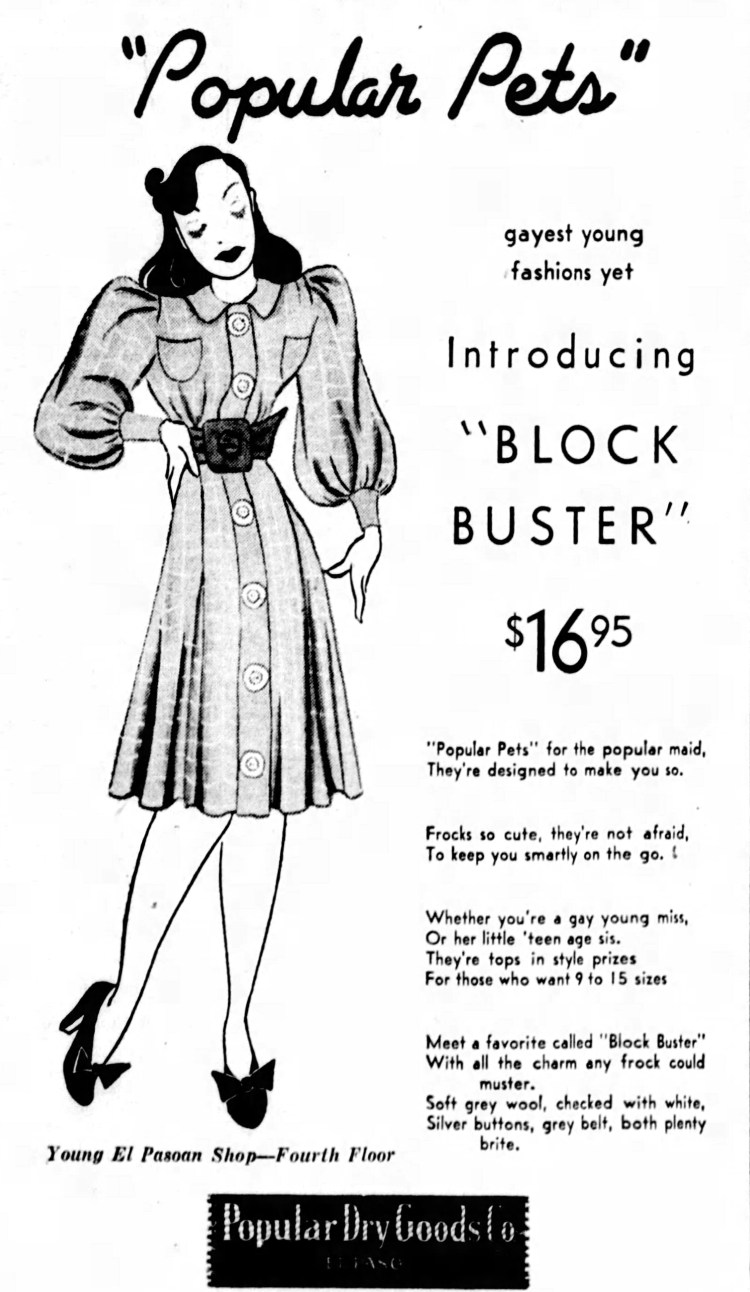
USA, 1942: a large aerial bomb that can destroy a whole block of buildings—USA, 1942: a thing of enormous impact, power or size
Read Morea gesture (made by a French person to deny responsibility, knowledge or agreement) consisting typically in shrugging one’s shoulders while upturning one’s hands
Read Morein French contexts: a young person, especially a young man, belonging to a youth subculture of the 1950s and 1960s—UK, 1959—from the noun ‘blouson’ (a short jacket) and the adjective ‘noir’ (black)
Read Moresmartly dressed—from the verb ‘fig out/up’, meaning ‘to smarten up’—this verb is probably an alteration of the verb ‘feague’, of uncertain origin, meaning ‘to make (a horse) lively’
Read More
