meaning and origin of ‘to walk one’s chalks’
to go off—19th cent.—from a procedure consisting in making a person walk on a straight line drawn with chalk in order to establish whether they are inebriated
Read More
“ad fontes!”
to go off—19th cent.—from a procedure consisting in making a person walk on a straight line drawn with chalk in order to establish whether they are inebriated
Read More‘maudlin’: tearfully sentimental – from the Middle-English name ‘Maudelen’, designating Mary Magdalene, a follower of Jesus, customarily represented as weeping
Read More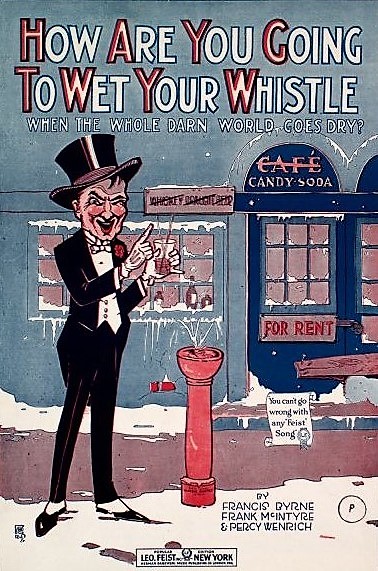
In ‘to wet one’s whistle’ (to take a drink), attested in the late 14th century, in Chaucer, ‘whistle’ is jocular for the mouth or the throat.
Read Moremoonraker: a native of Wiltshire; from the tale that some of them mistook the reflection of the moon in a pond for a cheese and tried to rake it out.
Read More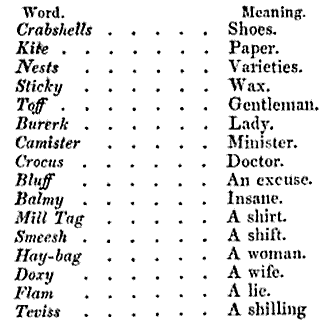
A ‘barmy’ person has a ‘frothy top’, insubstantial brains, from ‘barm’, the froth that forms on the top of fermenting malt liquors.
Read More
A Mad Dog in a Coffee House (London, 20th March 1809) by the English caricaturist Thomas Rowlandson (1756-1827) The term hair of the dog denotes an alcoholic drink taken to cure a hangover. It is a shortening of the phrase hair of the dog that bit you, first recorded in A dialogue […]
Read Moreadvertisement for Blotto brothers’ triporteurs Le Jardin des Modes nouvelles – 15th October 1913 The adjective blotto, which means drunk [however, cf. note 1], originated in British military slang during the First World War. It is first recorded in this sense in the chapter Slang in a War Hospital of Observations of an Orderly: […]
Read More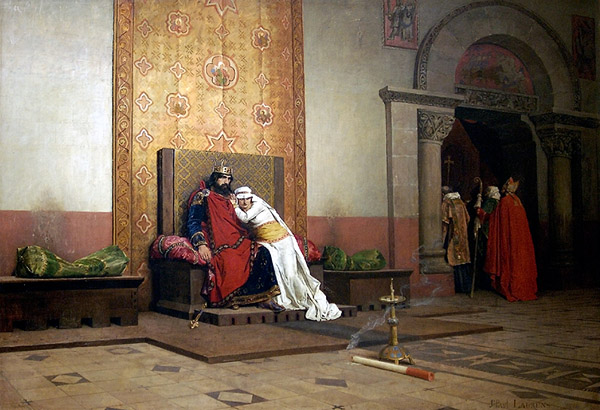
The Excommunication of Robert the Pious (1875), by the French artist Jean-Paul Laurens (1838-1921)—image: Wikimedia Commons The officiants have just excommunicated Robert by bell, book, and candle [note 1], and left the quenched candle behind. Robert II (972-1031), known as the Pious, the son of Hugues Capet, was excommunicated for incest by Pope Gregory V […]
Read More
This advertisement for the second season (2014) of comedienne Amy Schumer’s sketch show, Inside Amy Schumer, highlighted both the “hot” and “mess” sides of her personality — photograph: Jamey Welch Creative The primary meanings of the noun mess are a serving of food, a course, a meal, a prepared dish of a specified […]
Read More
The pharmaceutical firm Burroughs, Wellcome & Company was founded in London in 1880 by the American-born entrepreneurs Silas Burroughs (1846-95) and Henry Wellcome (1853-1936). They registered the name Tabloid (with capital initial) on 14th March 1884, as a trademark for concentrated drugs and medicines in tablet form. (It remains a proprietary name to this day.) The firm applied the […]
Read More
