‘the proof of the pudding is in the eating’: meaning, origin and variants
‘something new can only be judged to be good or bad after it has been tried or used’ (‘proof’ = ‘test’)—1623, in Remaines, concerning Britaine, by W. Camden
Read More
“ad fontes!”
‘something new can only be judged to be good or bad after it has been tried or used’ (‘proof’ = ‘test’)—1623, in Remaines, concerning Britaine, by W. Camden
Read More
noun (late 17th cent.), perhaps from ‘bull’ (= bovine)—possibly distinct from ‘bully’ (mid-16th cent.), ‘darling’, probably from Middle Dutch ‘boele’, ‘lover’
Read More
from ‘at do’ (meaning ‘to do’)—construction ‘to have’ + pronominal object (e.g. ‘much’) + ‘at do’ led to ‘ado’ reinterpreted as a noun qualified by an adjective
Read More
phonetic reduction of ‘Christ’s cross’; first element phonetically reduced as in ‘Christmas’; hence ‘criss-cross’ treated as a reduplication of ‘cross’
Read More‘blanket’: from Old-Northern-French and Anglo-Norman forms such as ‘blankete’ (white woollen material), composed of ‘blanc’ (white) and the diminutive suffix ‘-ette’
Read More
The spelling ‘ache’ (erroneously derived from Greek ‘ákhos’) instead of ‘ake’ is largely due to Samuel Johnson in A Dictionary of the English Language (1755).
Read More
UK, 1826—from the eponymous character played by John Liston in a comedy by John Poole, which premiered at the Haymarket Theatre, London, on 13th September 1825
Read More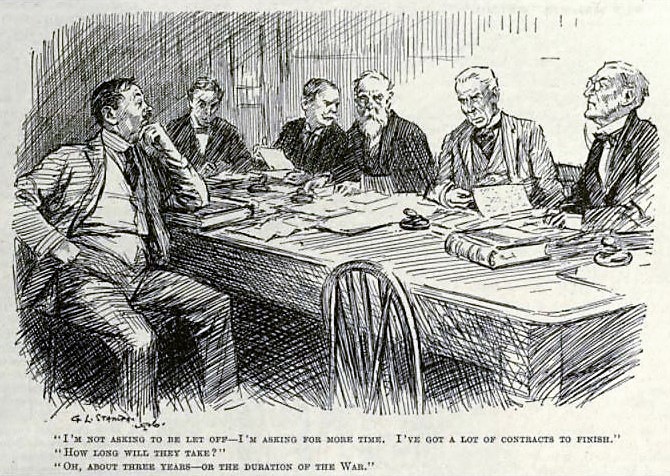
UK, 1917—originally used of the First World War, from the term of enlistment ‘for three’, or ‘four’, ‘years or for the duration of the war’
Read Moremid-17th cent. in the sense ‘brand new’—from ‘spick and span new’, extension of ‘span new’, from Old Norse ‘spán-nýr’, ‘as new as a freshly cut wooden chip’
Read MoreUK, early 19th cent.—‘shipshape’: arranged properly as things on board ship should be; ‘Bristol fashion’: Bristol was then the major west-coast port of Britain
Read More word histories