origin of ‘to know where the bodies are buried’
‘to know where the bodies are buried’: to have personal knowledge of the secrets or confidential affairs of an organisation or individual—USA, 1928, as ‘to know where the body is buried’
Read More
“ad fontes!”
‘to know where the bodies are buried’: to have personal knowledge of the secrets or confidential affairs of an organisation or individual—USA, 1928, as ‘to know where the body is buried’
Read Moreused with reference to a conventional or idealised romance—originated (USA, 1931) in cinematographic plot summaries in which ‘boy meets girl’ featured
Read More‘the lion’s share’ (UK, 1790)—calque of French ‘le partage du lion’ (now ‘la part du lion’)—from ‘The Heifer, the She-Goat, and the Ewe, in partnership with the Lion’, a fable by Jean de La Fontaine (1621-95)
Read More‘hell in a handbasket’ (1841), ‘heaven in a handbasket’ (1834) in Irish contexts—‘handbasket’ chosen for alliteration with ‘hell’—‘to go to hell in a handbasket’ meant ‘to go to hell’—‘to go to heaven in a handbasket’ meant ‘to go to heaven’ or ‘to go to hell’
Read MoreUK, 1835—mischievous or deceitful behaviour—alludes to the proverbial playfulness of monkeys—probably modelled on Bengali ‘bãdrāmi’; cf. modern Sanskrit ‘vānara-karman’, from ‘vānara’ (monkey) and ‘karman’ (action, work, employment)
Read More‘the milk in the coconut’: a puzzling fact or circumstance; alludes to the question of how the milk got into the coconut—of British-English origin (1832), not of American-English origin as stated by the Oxford English Dictionary
Read Morefrom the notion that even a dead cat will bounce if dropped from a sufficient height—UK, 1981: a rapid fall in the stock market with hardly any reaction—USA, 1985: a rapid but short-lived recovery in the stock market after a sharp fall—hence, 1992: any spurious success
Read More‘a stiff upper lip’: a quality of uncomplaining stoicism—now understood as referring to what is believed to be a quintessentially British trait, the repression of emotion, but originated in fact in North America (USA, 1811)
Read More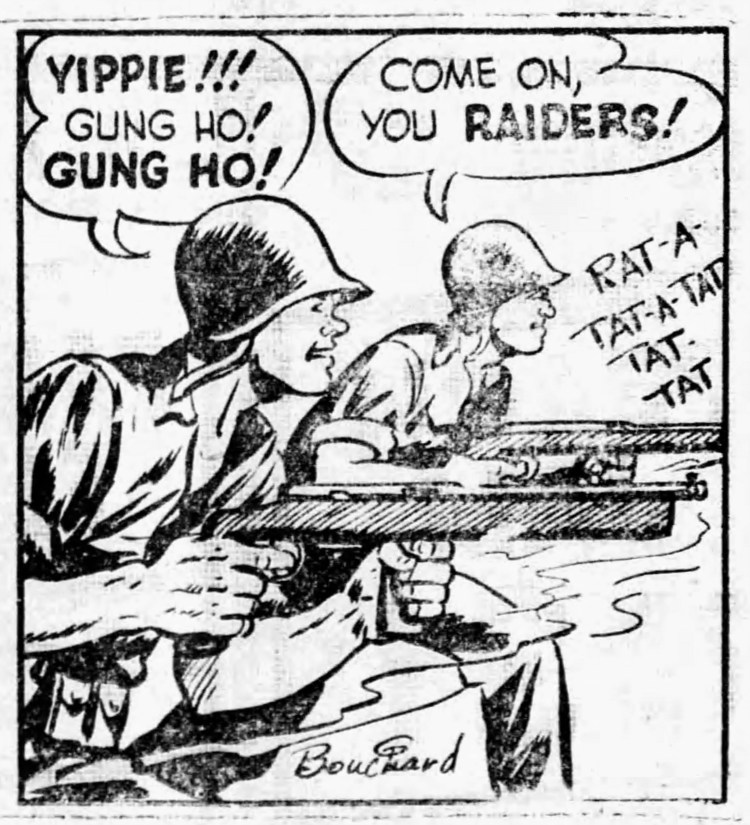
from Chinese ‘gōnghé’, short for ‘Zhōngguó Gōngyè Hézuò Shè’ (Chinese Industrial Cooperative Society)—interpreted as a slogan meaning ‘work together’ (USA, 1941)—adopted by Evans F. Carlson, commander of the 2nd Marine Raider Battalion (1942)
Read More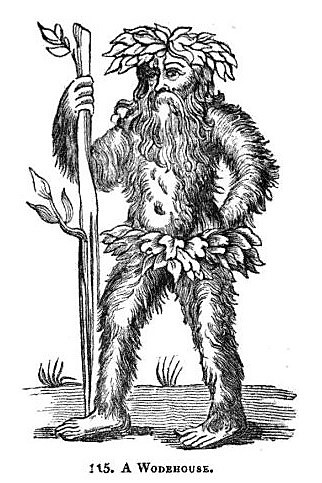
three meanings: 1/ in outdoor pageants: a man dressed in greenery, representing a wild man of the woods—2/ in inn names and signs: a forester—3/ in medieval English churches: a representation of a man’s face composed of, surrounded by, or sprouting foliage or branches
Read More word histories