meaning and origin of ‘the Slough of Despond’

the name of a deep boggy place at the beginning of Christian’s journey to the Celestial City in ‘The Pilgrim’s Progress’ (1678), by John Bunyan
Read More
“ad fontes!”
the name of a deep boggy place at the beginning of Christian’s journey to the Celestial City in ‘The Pilgrim’s Progress’ (1678), by John Bunyan
Read More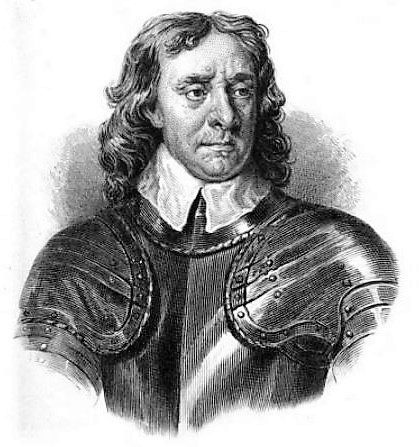
said to have originated in Oliver Cromwell’s instructions to the painter Peter Lely to represent him as he truly was, without concealing his blemishes
Read More1837—used by Sainte-Beuve to describe French poet Vigny’s seclusion in a turret room and preoccupation with inspiration unconnected with practical matters
Read More
from the image of breaking the frozen surface of a river in order to make a passage for boats – probably from Latin ‘scindere glaciem’, in Erasmus’s Adages
Read More
a threat within a community, nation, etc., as distinct from an external enemy—infamously used of British miners’ leaders by Prime Minister Margaret Thatcher in 1984
Read Moreone who changes their principles to suit the circumstances—from a vicar who was twice a Catholic and twice a Protestant from Henry VIII to Elizabeth I’s reigns
Read Moremid-19th cent.—perhaps from a specific application of the general term of abuse ‘Frog’, aided by the shared initial consonant cluster in ‘French’ and ‘frog’
Read More
second half of the 18th century—a mere fanciful extension of ‘all my eye’—maintained in a sort of artificial life by persistent conjectures about its origin
Read MoreThe verb unfriend was coined by the Church of England clergyman Thomas Fuller (1608-61) in The Appeal of Injured Innocence (1659).
Read More
‘according to Gunter’: correctly; reliably—early 18th century, from the name of the English mathematician Edmund Gunter (1581-1626)
Read More
