early meanings of the portmanteau ‘screenager’

USA—blend of ‘screen’ and ‘teenager’—(1957) teenagers reacting to a movie—(1985) teenagers as represented by TV and cinema
Read More
“ad fontes!”
USA—blend of ‘screen’ and ‘teenager’—(1957) teenagers reacting to a movie—(1985) teenagers as represented by TV and cinema
Read More
UK and Canada, from 1903 onwards—punningly alludes to ‘Rule Britannia’ (1740), the title of a popular patriotic song
Read MoreUSA, 1822—extremely pleased, delighted—alludes to the belief that a dog wags its tail as a sign of pleasure or happiness
Read MoreUSA, 1960s—those who already have will receive more—refers to gospel of Matthew—coined by sociologist Robert King Merton
Read MoreBritish origin—popularised by Harold Wilson in 1956, but first recorded in The Observer (London) of 30 October 1955
Read MoreBritish Army slang, 1945—the image is of something dropping with a clang, i.e. with a loud resonant ringing sound.
Read More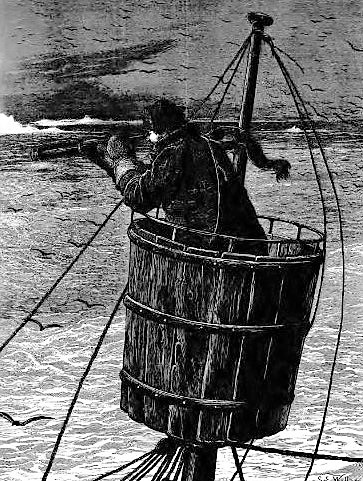
UK, early 19th century—The invention of the crow’s nest is attributed to the Arctic whaler William Scoresby Senior (1760-1829).
Read Moreto avoid work, to shirk one’s duty—originated in military slang during the First World War, the word ‘column’ denoting a formation of marching soldiers
Read MoreUK, 1831—In ‘beer and skittles’, denoting unmixed enjoyment, the image is of a person drinking beer while playing skittles.
Read MoreUSA, 1906—popularised by a telegram sent to boxer Joe Gans by his mother, requesting him before a fight to win and ‘bring home the bacon’
Read More
