‘amour fou’: meaning and origin
uncontrollable or obsessive passion—French phrase introduced in the 1960s as a theme of drama, prose narrative and cinema
Read More
“ad fontes!”
uncontrollable or obsessive passion—French phrase introduced in the 1960s as a theme of drama, prose narrative and cinema
Read More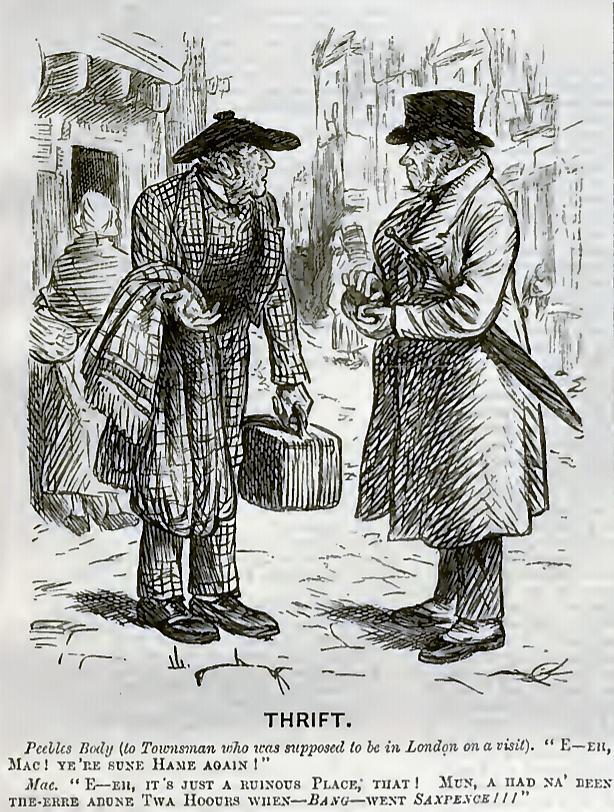
UK, 1870—based on the stereotype of Scots being miserly—from the story of the Scotsman who complained that he had to spend, in London, the small sum of sixpence
Read More1928—addressed to someone who looks glum—‘scone’ (originally Scots, early 16th century) denotes a light plain doughy cake
Read More
USA—originally used during the 1960 presidential election campaign by the Democratic Party to denigrate Richard Nixon, the Republican Party’s nominee
Read MoreUSA, 1938—male-chauvinistic phrase meaning that the place of women is in the home and that their role is to bear children—also ‘pregnant and barefoot(ed)’
Read More
UK, 1851—a disappointing end to an otherwise exciting display—refers to the cleaning-up, especially of horse-dung, necessary after the Lord Mayor’s Show, in London
Read More
USA, 1934—addressed, often with ironic pity, to someone who has had an arduous day—from very popular 1934 song, ‘Little Man, You’ve Had a Busy Day’
Read More
children are inclined to eavesdrop; used as a warning (“children are listening”)—USA, 1901—perhaps a modification of synonymous ‘little pitchers have big ears’
Read More
American English 1921–British and Irish English 1923—although it was already a cliché, ‘schoolgirl complexion’ was popularised by the advertising slogan for Palmolive Soap
Read More
USA, 1956—jocular variant of equally jocular ‘see you later, alligator’ (1952)—recoined on separate occasions by various persons, independently from one another
Read More word histories