meaning and origin of the phrase ‘to lick into shape’
This phrase originated in the belief that bear cubs were born formless and had to be licked into shape by their mother.
Read More
“ad fontes!”
This phrase originated in the belief that bear cubs were born formless and had to be licked into shape by their mother.
Read More
The original form of this phrase was ‘pigs fly with their tails forward’. Also: the French, Italian, Portuguese and Spanish equivalent expressions.
Read More
The French word for the oyster-shaped piece of meat in the hollow of the pelvic bone of a fowl is ‘sot-l’y-laisse’, literally ‘(the) fool leaves it there’.
Read More‘Mad as a hatter’ might be from ‘like a hatter’, an intensive phrase meaning ‘like mad’, perhaps related to the verb ‘hotter’, expressing motion and emotion.
Read More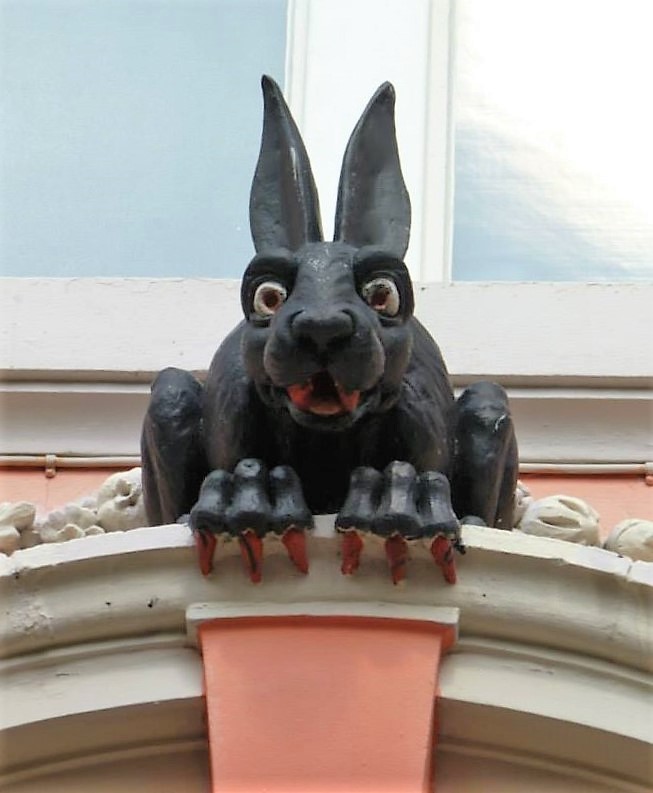
‘(As) mad as a March hare’ refers to the fact that, in the breeding season, the hare is characterised by much leaping, boxing and chasing in circles.
Read More
Of French origin, the word ‘poulet’, literally ‘chicken’, denotes a love letter. It probably refers to the fact that when folding these messages, one would make two tips resembling chicken wings.
Read More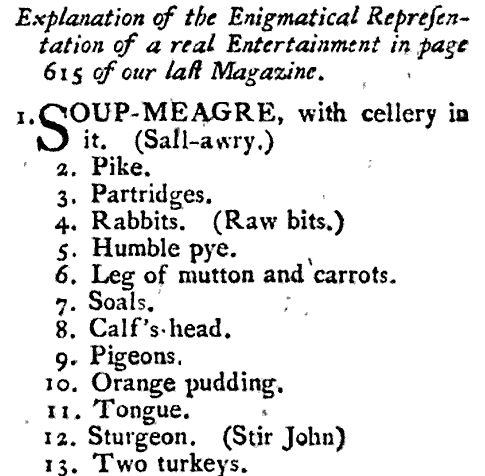
A puzzle published in The Hibernian Magazine, or, Compendium of Entertaining Knowledge (Dublin, Ireland) in 1774 punned on the humble of humble pie, which may indicate that the latter term was already used figuratively at that time. The following is from the October issue: […]
Read More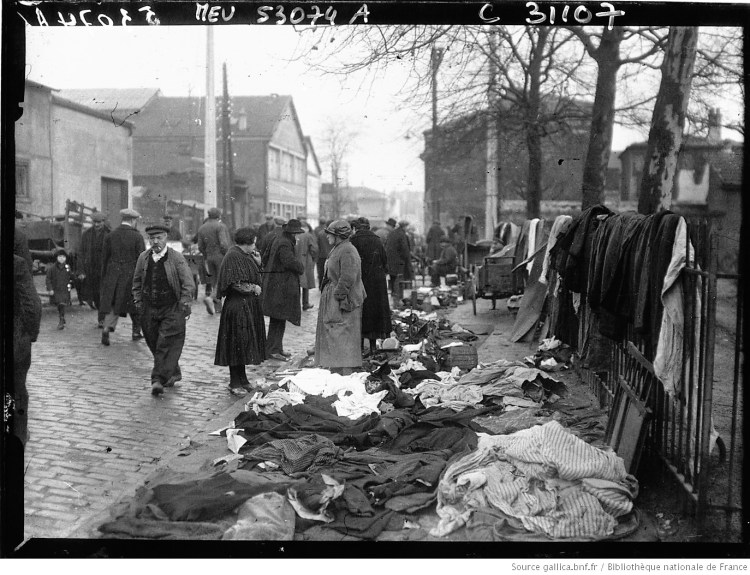
Marché aux puces à Montreuil – Agence Meurisse – 1928 source: gallica.bnf.fr / Bibliothèque Nationale de France The term flea market is a calque of French marché aux puces. Both names denote a street market selling second-hand goods. In In Europe (Pusey Press, New York, 1922), the American author George Samuel Dougherty […]
Read More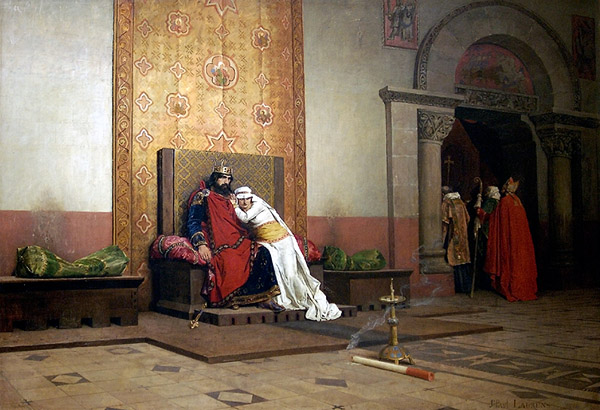
The Excommunication of Robert the Pious (1875), by the French artist Jean-Paul Laurens (1838-1921)—image: Wikimedia Commons The officiants have just excommunicated Robert by bell, book, and candle [note 1], and left the quenched candle behind. Robert II (972-1031), known as the Pious, the son of Hugues Capet, was excommunicated for incest by Pope Gregory V […]
Read More
In a letter that she wrote to her sister in December 1797, the English novelist, diarist and playwright Madame d’Arblay (née Frances Burney – 1752-1840) gave an account of a conversation with Princess Augusta, daughter of King George III (Sarah Siddons (1755-1831), one of the greatest English tragediennes, had bought Sadler’s Wells, a London […]
Read More word histories