the origin of ‘to pull the wool over someone’s eyes’?
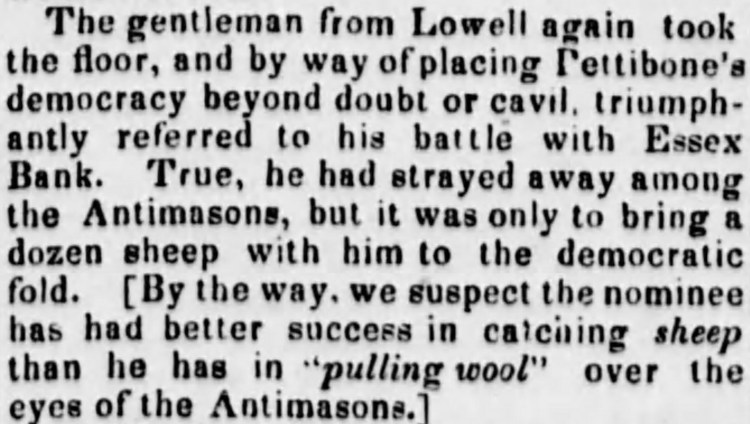
‘to pull the wool over someone’s eyes’, US, 1830s—perhaps from sheep farming: the hair that grows around a sheep’s eyes can get into them and blind the animal.
Read More
“ad fontes!”
‘to pull the wool over someone’s eyes’, US, 1830s—perhaps from sheep farming: the hair that grows around a sheep’s eyes can get into them and blind the animal.
Read More
used by Abraham Lincoln to indicate that he was renominated for President because the Republicans did not want to take a risk during the American Civil War
Read Moreprobably from Latin ‘Mater Cara’ or Italian ‘Madre Cara’, ‘dear mother’, i.e. the Virgin Mary, believed by sailors to send the petrel as a harbinger of storms
Read More
‘a nod’s as good as a wink (to a blind horse)’ 18th century—acknowledges that a hint or suggestion has been understood without the need of further elaboration
Read Moreto return to the matter in hand—from French ‘revenons à nos moutons’ (‘let’s return to our sheep’), allusion to ‘La Farce de Maistre Pierre Pathelin’ (ca 1457)
Read Moremid-19th cent.—perhaps from a specific application of the general term of abuse ‘Frog’, aided by the shared initial consonant cluster in ‘French’ and ‘frog’
Read MoreOrigin: for purposes of fasting, food was divided into categories – ‘fish’, the flesh of fish, ‘flesh’, the flesh of land-animals, ‘fowl’, the flesh of birds.
Read More
‘caper’: probably abbreviation of ‘cabriole’, from Italian ‘capriola’, literally ‘female roe deer’, from Latin ‘capreola’, ‘wild goat’, from ‘capra’, she-goat
Read More‘betwixt and between’, late 18th century—not fully or properly either of two things, in an intermediate or middling position
Read Moreearly 20th century—refers to the method of tempting a donkey to move forward by dangling a carrot before it, and beating it with a stick if it refuses
Read More word histories