UK, 1805—personifies France or the French people, or designates a typical Frenchman—composed of ‘Johnny’, a pet form of ‘John’ used, with modifying word, to designate a person of the type, group, etc., specified, and of French ‘crapaud’ (a toad)—coined by British sailors during the Napoleonic Wars
1747—a small outlay or risk ventured in the hope or expectation of a significant return—a metaphor from fishing, in which sprats are used as bait to catch larger fish—in early use with the words ‘salmon’ and ‘herring’ instead of ‘mackerel’
Scotland, 1806—to make a determined effort to achieve something, whether ending in success or failure—refers to the making of spoons out of the horns of cattle or sheep, which was common in Scotland till late in the 19th century
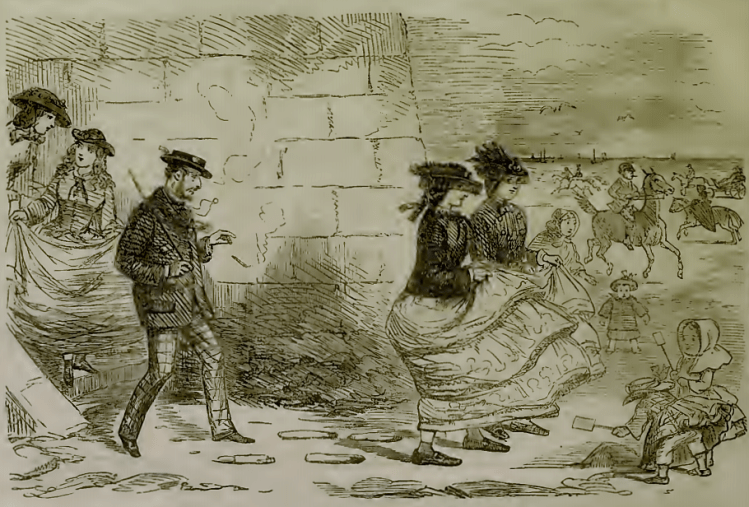
denotes a foot or a boot, especially a big one—1856, in the caption to a cartoon by John Leech, published in Punch (London, England): “A vulgar and disgusting expression, implying that a foot is big enough, and flat enough, to kill Black-beetles”
Lancashire, England, 1833—a faggot, a meatball, “a compound of onions, flour, and small pieces of pork” (The Liverpool Echo, 20 August 1880)—probably one of the common dishes humorously named after daintier items of food
Liverpool, England—(1957) an insalubrious place—(1961) the neighbouring town of Bootle regarded as a rough area—said to refer to the Knowsley’s Bug Circus of Bootle, which featured clog-shod, chain-smoking performing bugs
UK, 1741—all day, incessantly—also, in early use, ‘morn, noon and night’—different from the juxtaposition of the nouns ‘morning’, ‘noon’ and ‘night’, which refers to an action taking place first in the morning, then at noon, and finally at night
1762—(especially of an ancient style of writing): having alternate lines written from left to right and from right to left—from the Greek adverb ‘βουστροφηδόν’, meaning literally ‘as an ox turns (in ploughing)’, with allusion to the course of the plough in successive furrows
USA, 1898—a view as seen from below or from a humble position—refers to a view taken as from the standpoint of a worm, i.e. from ground-level—coined after ‘bird’s-eye view’ (1782), denoting a view of a landscape from above, such as is presented to the eye of a bird