There have been, since the early 20th century a number of colourful variants of the U.S. phrase ‘as busy as a one-armed paperhanger’—for example, in Australian English, ‘as busy as a one-armed taxi-driver with crabs’ and ‘as busy as a brickie in Beirut’.
Australia, 1879—With reference to the supposed destruction of the brain by white ants (i.e., termites), the plural noun ‘white ants’ is used of loss of sanity, sense or intelligence. (The singular noun ‘white ant’ occasionally occurred in early use.)
The obsolete Australian-English phrase to jump one’s horse over the bar, and its variants, meant to sell a horse for liquor. The following definition is from an unpublished manuscript entitled Materials for a dictionary of Australian Slang, collected from 1900 to 1910, by Alfred George Stephens and S. J. O’Brien—as quoted by Gerald Alfred Wilkes (1927-2020) in A […]
Australia, 1912—of a racehorse: to perform very badly—also in extended use and in the opposite sense—from ‘hairy goat’ (1894): a racehorse which performs badly—synonym ‘hairy dog’ (1908)
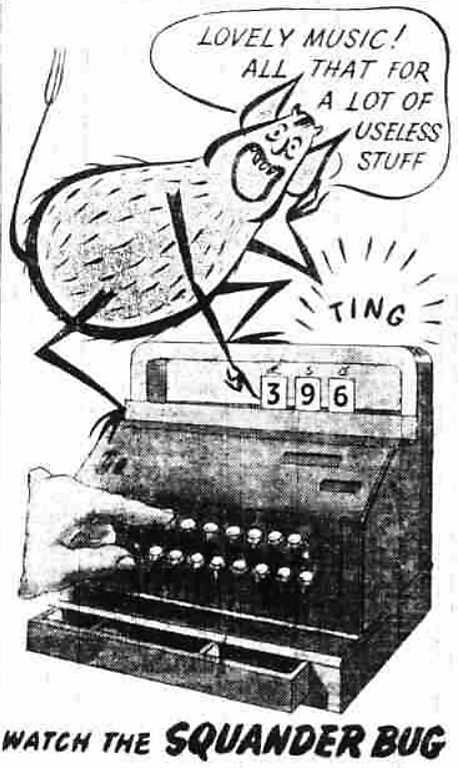
1943—a devilish insect symbolising reckless extravagance and waste—introduced by the National Savings Committee in a government publicity campaign promoting economy—hence: one who is profligate with money or resources
to use unnecessary force in destroying something fragile—alludes to a wheel used as an instrument of torture—first occurs in An Epistle from Mr. Pope, to Dr. Arbuthnot (1734), by the English poet Alexander Pope (1688-1744), who perhaps coined this phrase
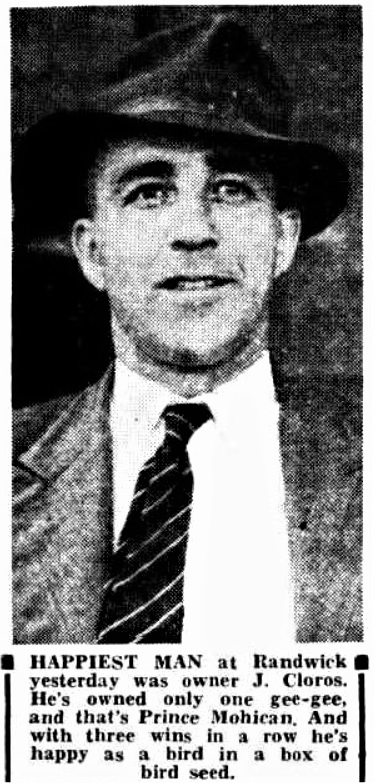
Australia and New Zealand, 1939—to be in good spirits, ‘chirpy’—the image is of a boxful of chirping birds (cf. the extended form ‘happy as a bird in a box of birdseed’)—New-Zealand variant ‘to be a box of fluffy ducks’, also ‘to be a box of fluffies’
Australia, 1998—a pair of short, tight-fitting men’s swimming trunks—refers to the appearance of the male genitals in figure-hugging trunks—‘budgie’: colloquial abbreviation of ‘budgerigar’, denoting a small Australian parrot
‘red rag’—a piece of red cloth used to provoke an animal—hence, figuratively, a source of provocation or annoyance, something which excites violent indignation—the notion occurs in the late 16th century