‘a trout in the milk’: meaning and origin
highly convincing circumstantial evidence—USA, 1862—ascribed to Henry David Thoreau—refers to the practice of surreptitiously diluting milk with stream-water
Read More
“ad fontes!”
highly convincing circumstantial evidence—USA, 1862—ascribed to Henry David Thoreau—refers to the practice of surreptitiously diluting milk with stream-water
Read MoreUK, 1813, as ‘to blot the landscape’, meaning, of an ugly feature, to spoil the appearance of a place—also used figuratively of anything unsightly or unappealing that spoils an otherwise pleasant scene
Read Moreused conversationally to declare, often ironically, that one shares the opinion, sentiment, predicament, etc., of the previous speaker—USA, early 20th century
Read Morealso ‘to be all thumbs’—to be extremely clumsy (i.e., lacking in manual dexterity)—19th century—variants of the original phrase ‘each finger is a thumb’, already proverbial in the mid-16th century
Read Morea period of warm, springlike weather occurring in the autumn—hence, figuratively, a late period of youthfulness—first used from 1639 onwards by the Anglican clergyman and historian Thomas Fuller (1608-1661)
Read More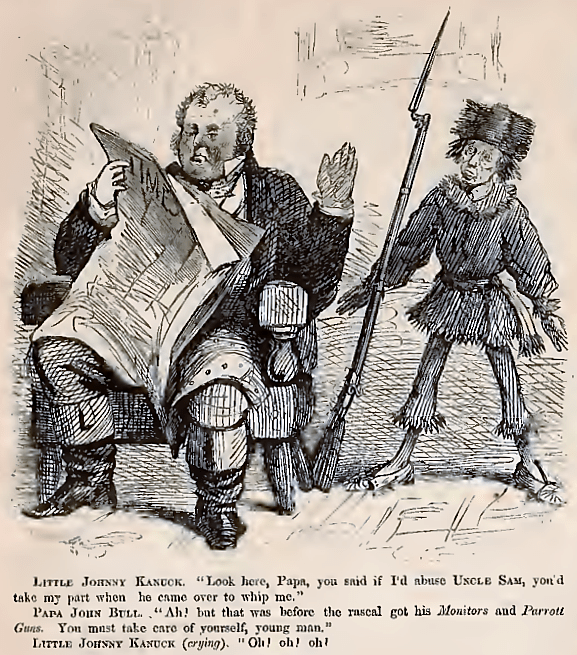
USA, 1858—a personification of the Canadian nation; Canadian people collectively; as a count noun: a Canadian—from ‘Canuck’, meaning Canadian—‘Johnny’ is used with modifying word to designate a person of the type, group, profession, etc., specified
Read MoreAustralia, 1933—an addict of cheap wine or/and of methylated spirits—apparently coined jocularly after ‘Wyandotte’, denoting a domestic chicken of a medium-sized American breed
Read More
UK, WWII, army slang—‘spud-bashing’ (noun): potato-peeling; ‘spud-bash’ (verb): to peel potatoes; ‘spud-basher’ (noun): one who peels potatoes—those words have also been used with reference to potato-digging
Read MoreThe noun ‘hardy annual’ denotes a plant that can withstand freezing temperatures and which completes its life cycle within a year. In British English, this noun is used figuratively of a thing or a person that reappears continually or at regular intervals.
Read More
British-Army slang, 1972: a suit of protective clothing for use in nuclear, biological or chemical attacks—by extension: a suit of protective clothing for use by agricultural employees working with chemical sprays—perhaps refers to ‘Noddy’, a character in the writings of Enid Blyton
Read More
