There are two Valentines, both Italian, one a priest and the other a bishop, who were martyred and used to be commemorated in the Roman Catholic calendar on 14th February. However, they have no romantic associations and the modern customs linked with St Valentine’s Day arise from a tradition according to which it is the day when the […]
In the United Kingdom, especially in the mid-1950s, a Teddy boy was a young man characterised by a style of dress and appearance held to be characteristic of Edward VII’s reign (1901-10), typically a long velvet-collared jacket, drainpipe trousers and sideburns (Teddy is a pet form of Edward (VII)). The term first appeared in print […]
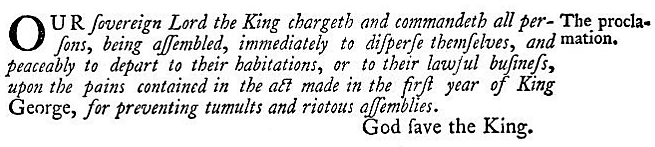
Our sovereign Lord the King chargeth and commandeth all persons, being assembled, immediately to disperse themselves, and peaceably to depart to their habitations, or to their lawful business, upon the pains contained in the act made in the first year of King George, for preventing tumults and riotous assemblies. […]
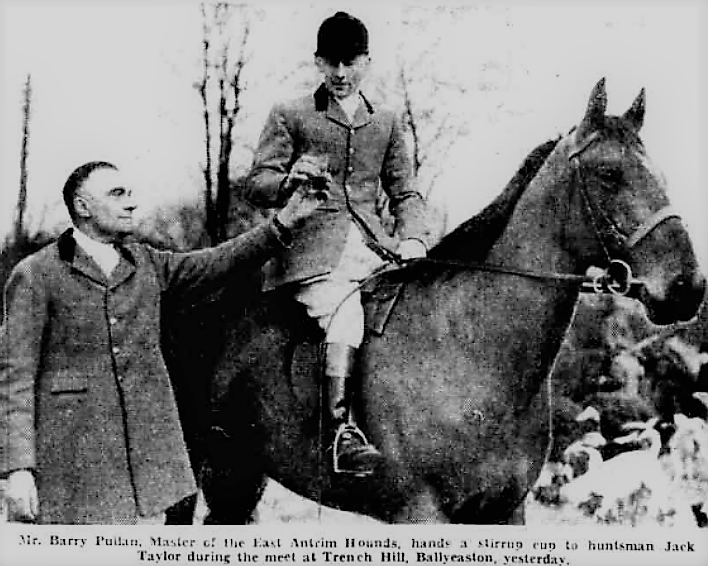
Huntsmen still use stirrup cup to designate an alcoholic drink offered to riders either as they are about to depart or when they return. Mr. Barry Puilan, Master of the East Antrim Hounds, hands a stirrup cup to huntsman Jack Taylor during the meet at Trench Hill, Ballyeaston, yesterday. from The Northern Whig and Belfast […]
Sir John Herschel The announcement last Friday of the death, at the age of 81, of the Rev. Sir John Herschel, Bart., which occurred at Observatory House, Slough, revives a host of memories of 18th century Bath. Sir John Herschel was the great-grandson of Sir William Herschel, the famous astronomer, who discovered from his scientific […]
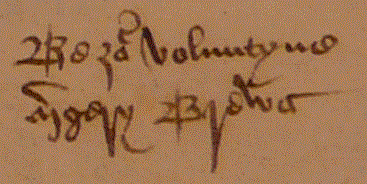
The noun marrowsky, which has also been spelt Marouski, Marowsky, morowski and mowrowsky, denotes a variety of slang, or a slip in speaking, characterised by the transposition of the initial letters or syllables of two words. The more usual term is spoonerism (cf. also malapropism and eggcorn). The word is first recorded in the verbal form Marrowskying in […]
MEANINGS – a person who habitually talks about others, especially maliciously – a conversation involving malicious chatter or rumours about other people – casual and idle chat – light easy communication ORIGIN This word is from the Old English noun godsibb, composed of god and the adjective sib(b), meaning akin, related (cf. the noun sibling, which is composed of sib and […]
Like Jack, pet form of John, Joe, familiar abbreviation of Joseph, is colloquially used as a generic term for a lad, a fellow, a chap. And, like Joe Blow, Joe Citizen, Joe Doakes and Joe Six-Pack in American English, Joe Soap and Joe Bloggs in British English are generic names for an average man. —Cf. also Onion Johnny. These are the earliest […]
To make (both) ends meet means to earn just enough money to live on. It is first recorded in The History of the Worthies of England (1662), by the Church of England clergyman Thomas Fuller (1607/8-61). The author wrote the following about the English Protestant leader Edmund Grindal (1519-83) – in the original text, to […]
The colloquial terms bag of mystery and mystery bag denote a sausage, a saveloy. The British lexicographer John Stephen Farmer (1854-1916) gave the following explanations in Slang and its Analogues Past and Present ([London]: Printed for subscribers only, 1890): Bags of mystery (common).—Sausages and saveloys are so called—from the often mysterious character of their compounds. Presumably composed […]



 word histories