the gods at the Comedy Theatre, London, 1949 source: Historic England – The Theatres Trust Via Middle French galerie, the noun gallery, attested in the late 15th century, is from the medieval Latin of Italy galeria, an alteration of medieval Latin galilaea, designating a porch at the entrance of a monastery’s church—hence English […]
In a letter that she wrote to her sister in December 1797, the English novelist, diarist and playwright Madame d’Arblay (née Frances Burney – 1752-1840) gave an account of a conversation with Princess Augusta, daughter of King George III (Sarah Siddons (1755-1831), one of the greatest English tragediennes, had bought Sadler’s Wells, a London […]
The noun gooseberry denotes a round edible yellowish-green or reddish berry with a thin translucent hairy skin and the thorny shrub which bears these berries. Attested in the first half of the 16th century, it is probably based on Middle-French forms such as grosselle and groiselle (Modern French groseille), perhaps altered because of an unexplained […]
The noun marble, denoting a hard crystalline metamorphic rock resulting from the recrystallization of a limestone, is from Anglo-Norman forms such as marbre and marbelle, and from Old-French forms such as marbre, maubre and mabre, from classical Latin marmor. This Latin noun is from ancient Greek μάρμαρος (= mármaros), shining stone, marble, of […]
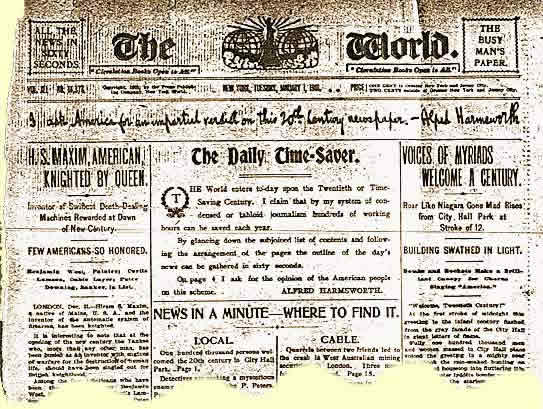
TABLOID DRAMA. SHAKESPEARE “BOILED DOWN” FOR THE MUSIC HALLS. Mr. Cecil Raleigh is in favour of Shakespeare being “boiled down” for the music-hall stage. It was after Mr. George Fuller Golden’s lecture on the influence of theatres upon the music-halls, to the members of the O.P. Club at the Criterion Restaurant, last night, […]
The pharmaceutical firm Burroughs, Wellcome & Company was founded in London in 1880 by the American-born entrepreneurs Silas Burroughs (1846-95) and Henry Wellcome (1853-1936). They registered the name Tabloid (with capital initial) on 14th March 1884, as a trademark for concentrated drugs and medicines in tablet form. (It remains a proprietary name to this day.) The firm applied the […]
Politicians usually work with blue smoke and mirrors. What appears to be real is mostly an illusion, and what is unlikely turns out to be real. But sometimes, the blue smoke and mirrors don’t work. When you can’t produce a budget, you can’t call a news conference and pretend you did. from The News […]
The term fifth column, which translates Spanish quinta columna, denotes the enemy’s supporters in one’s own country, or a body of one’s supporters in an attacked or occupied foreign country, hence, more generally, any group of hostile or subversive infiltrators, any enemy in one’s midst—synonym: the enemy within. The Spanish Civil War (1936-39) was the […]
Decorating, not vandalizing Organized toilet-papering: Tim Koss, a senior at Green Bay East High School, gets into the spirit of homecoming by decorating the school grounds with toilet paper Thursday night. East High encourages students to toilet-paper the school instead of homes. from Green Bay Press-Gazette (Green Bay, Wisconsin) of 29th September 1995 […]
Of American-English origin, Simon says denotes a children’s game in which players must obey the leader’s instructions only if they are prefaced with the words Simon says; it also denotes the command itself. The name Simon was probably chosen for alliterative effect (Simon says). —Synonymous phrase: O’Grady says. The earliest instance of the phrase Simon […]







 word histories