to live in conditions of extreme want—Australia, 1832; Ireland and Britain, 1834; USA, 1846—in early use, the phrase frequently occurs in relation to Ireland and to the armed forces
Australia, 1985—Coined after ‘corkage’, the noun ‘cakeage’ denotes, in a restaurant, the cutting and serving of a cake that has been brought in by a customer from off the premises, hence also a charge levied for this service.
USA—‘blue-sky talk’ 1900—‘blue-sky research’ 1947—the adjective ‘blue-sky’ is used to mean: (in negative sense) fanciful, hypothetical; (in positive sense) creative or visionary—from the notion of a blue sky as a place free from disturbances or difficulties
informal and often humorous: denotes the explicit or most intimate details of something—originally (USA, 1859) referred to accounts or representations of acts of violence and bloodshed
1907—whether one likes it or not; haphazardly—a humorous variant of ‘willy-nilly’, after the personal name ‘William’ (‘William’ being familiarly shortened to ‘Willy’)
‘parting shot’ (1817); ‘Parthian shot’ (1822): a sharp, telling remark, act, gesture, etc., made in departing—‘parting shot’: literally the final shot fired at the moment of departure—‘Parthian shot’: refers to the Parthian horsemen’s habit of shooting arrows backwards while in real or pretended retreat
USA, 1843—With reference to a dog used for hunting game, this phrase is used to express the opinion that a particular plan or approach will not succeed.
USA, 1927—denotes male vigour, especially sexual—with wordplay on ‘penis’—interestingly, via an alteration of the Latin diminutive ‘pēnĭcillus’, denoting literally a little tail, hence a painter’s brush or pencil, ‘pencil’ is derived from Latin ‘pēnis’, denoting literally a tail, hence the penis
USA (New England), 1868—alternately sunny and cloudy conditions usually indicate rain—the adjective ‘shet’ is a variant of ‘shut’—it was perhaps in order to provide a rhyme for the adjective ‘wet’ that the variant ‘shet’ was chosen in the proverb
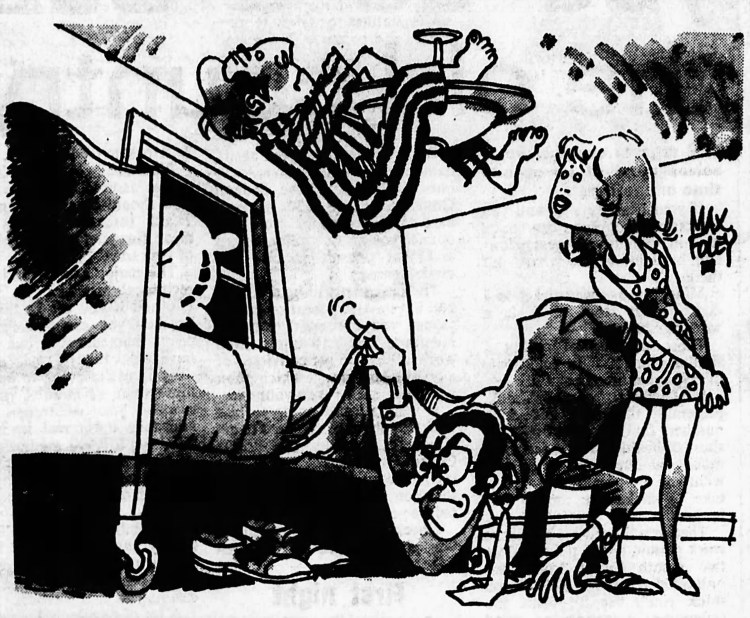
has been used to denote evidence of a de facto relationship affecting a woman’s eligibility for Social-Security benefits—refers to past practices of field officers inspecting homes and bedrooms

 word histories