A French kiss was originally a kiss on both cheeks.
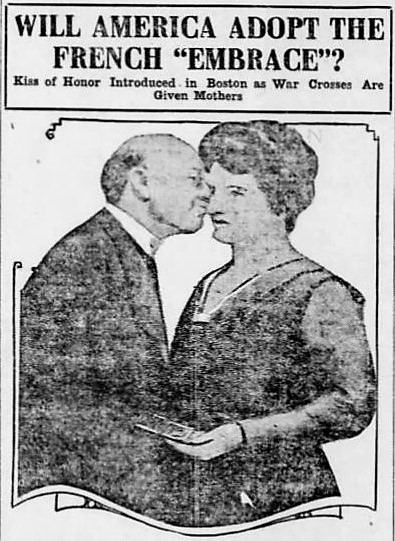
‘French kiss’—19th century: a kiss on both cheeks—early 20th century (USA): a kiss with contact between tongues
Read More
“ad fontes!”
‘French kiss’—19th century: a kiss on both cheeks—early 20th century (USA): a kiss with contact between tongues
Read More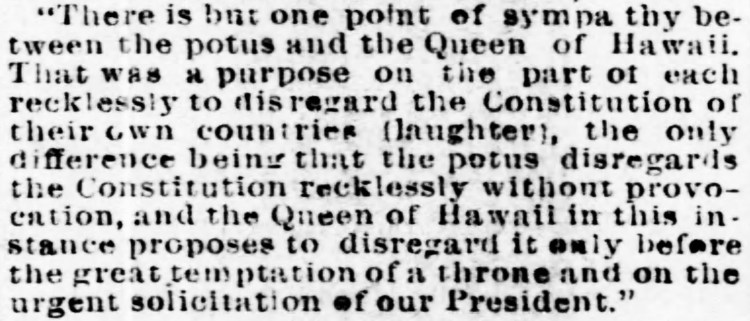
late 19th century—‘POTUS’ was originally an abbreviation used in the Phillips code, a telegraphic code created in 1879 by Walter P. Phillips (1846-1920).
Read More
USA, early 19th century—‘small potatoes’: person or thing considered petty, unimportant, insignificant or worthless
Read More
US, 1830s—a friction match; a radical faction of the Democratic Party—during a meeting, they lit candles with loco-foco matches when the lights were turned off
Read More
Since WWI, ‘Franglais’ has been coined to denote: French spoken by an Anglophone, English spoken by a Francophone and French speech using English words.
Read More
The phrase ‘to have someone’s guts for garters’, used as a hyperbolical threat, is first recorded in the late 16th century.
Read More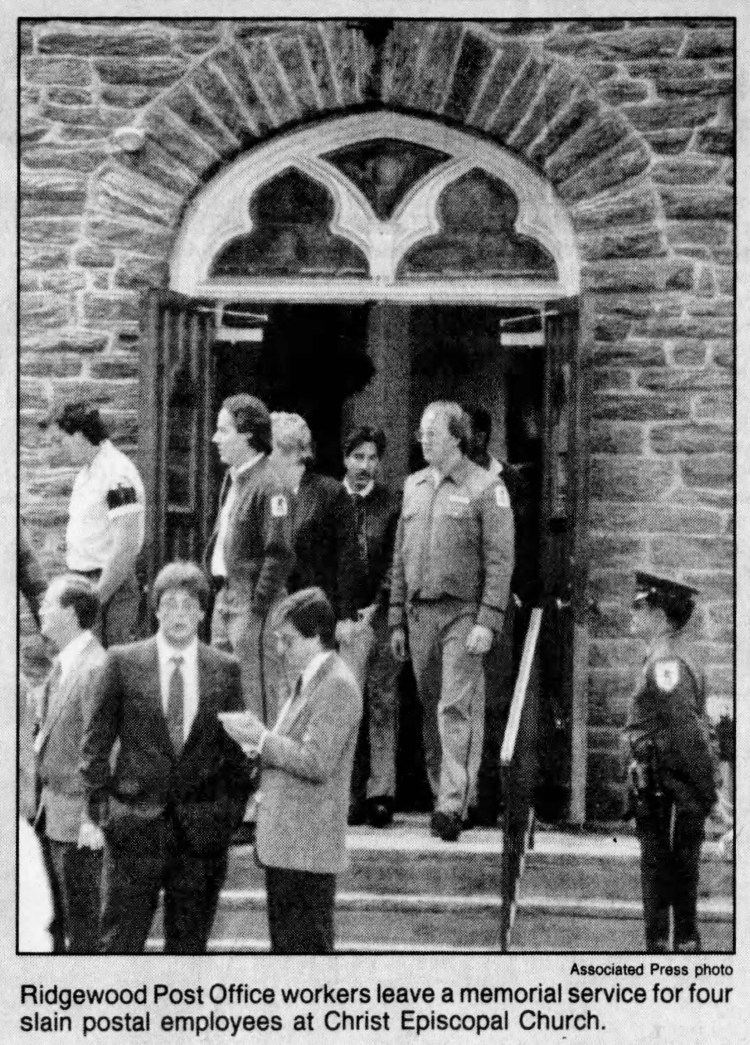
‘to go postal’: to go mad—US, early 1990s—owes its origin to several recorded cases in which employees of the U.S. Postal Service have shot at their colleagues
Read More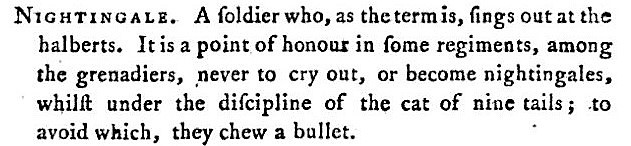
late 19th century—from the practice consisting, for a soldier, in biting on a bullet when being flogged
Read MoreThe verb unfriend was coined by the Church of England clergyman Thomas Fuller (1608-61) in The Appeal of Injured Innocence (1659).
Read More
‘according to Gunter’: correctly; reliably—early 18th century, from the name of the English mathematician Edmund Gunter (1581-1626)
Read More
