‘anything for a quiet wife’ | ‘anything for a quiet life’
‘anything for a quiet wife’ (1875)—jocular variant of ‘anything for a quiet life’ (ca. 1620), which expresses concession or resigned agreement, to ensure one is not disturbed
Read More
“ad fontes!”
‘anything for a quiet wife’ (1875)—jocular variant of ‘anything for a quiet life’ (ca. 1620), which expresses concession or resigned agreement, to ensure one is not disturbed
Read More1970—British and Irish English—acronym from the phrase ‘all coppers are bastards’—customarily written (tattooed in particular) rather than spoken
Read More1955—originated in stage plays purporting to depict life in northern England, particularly in Lancashire—‘mill’: a factory
Read Moreto praise oneself—first used by Benjamin Franklin in 1729—the image is that, when one’s trumpeter is dead, one is forced to find one’s own trumpet
Read Moretwo people, especially lovers, should be left alone together—UK, 1829 as ‘two is company, three none’—but notion already proverbial in 1678
Read More
broken English—UK, 1883—from ‘English As She is Spoke: or A Jest in Sober Earnest’ (London: Field & Tuer, 1883), title given to a book intended as a Portuguese-English conversational guide
Read Moremeaning: any possible thing, event, or situation is envisaged or found—UK, 1839—image of a scope ranging from the most innocuous to the most harmful
Read Morea person regarded as good-natured but also not ‘bright’ intellectually—UK, 1981—Australia, 1982—USA, 1986
Read More
‘The Daily Telegraph’: nicknamed ‘Torygraph’ for its adherence to Conservative Party—the ‘Daily Mail’: nicknamed ‘Daily Heil’ for its support for Fascists in the 1930s
Read More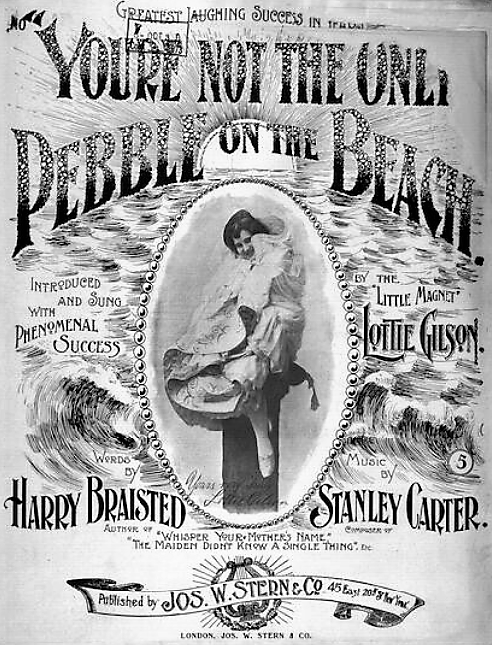
the only person or thing to be considered in a particular situation—USA, 1895—popularised by 1896 song ‘You’re Not the Only Pebble on the Beach’
Read More word histories