‘bone idle’: meaning and origin
Scotland, 1825 (as ‘bane idle’)—England, 1839—utterly lazy or indolent—‘bone’ seems to be used as an intensifier with adverbial force in the sense ‘through to the bone’, i.e., ‘deeply and fundamentally’
Read More
“ad fontes!”
Scotland, 1825 (as ‘bane idle’)—England, 1839—utterly lazy or indolent—‘bone’ seems to be used as an intensifier with adverbial force in the sense ‘through to the bone’, i.e., ‘deeply and fundamentally’
Read MoreUK, 1789—With reference to cockfighting, this phrase is used to express the opinion that a particular plan or approach will not succeed.
Read MoreUSA, 1927—denotes male vigour, especially sexual—with wordplay on ‘penis’—interestingly, via an alteration of the Latin diminutive ‘pēnĭcillus’, denoting literally a little tail, hence a painter’s brush or pencil, ‘pencil’ is derived from Latin ‘pēnis’, denoting literally a tail, hence the penis
Read More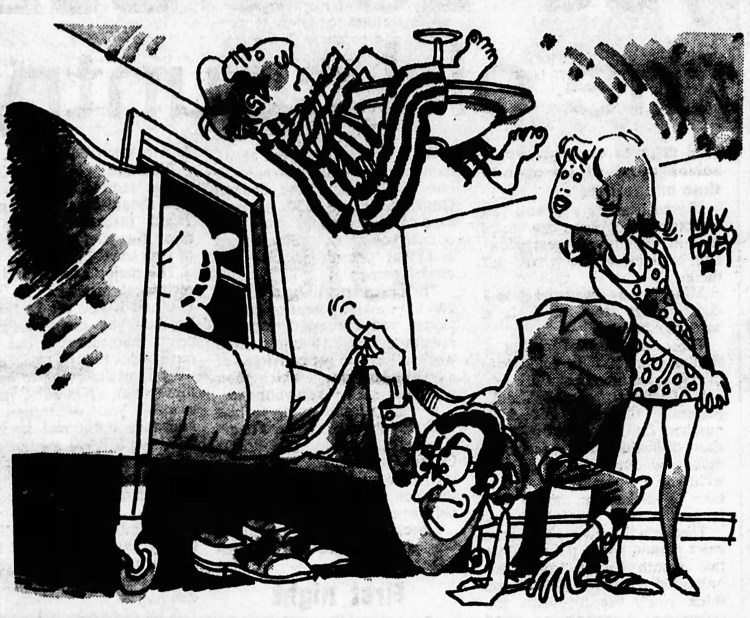
has been used to denote evidence of a de facto relationship affecting a woman’s eligibility for Social-Security benefits—refers to past practices of field officers inspecting homes and bedrooms
Read MoreUSA, 1837—to make assumptions about someone or something based on appearance or on superficial characteristics—the metaphor occurs in the preface to ‘Truth in Fiction: Or, Morality in Masquerade. A Collection of Two hundred twenty five Select Fables of Æsop, and other Authors’ (London, 1708), by Edmund Arwaker
Read Morean artist or writer who produces what is considered to be inferior work simply to earn a living—loan translation from German ‘Brotkünstler’—first used in 1827 by Scottish historian and political philosopher Thomas Carlyle in a text about German literature
Read Moreto use unnecessary force in destroying something fragile—alludes to a wheel used as an instrument of torture—first occurs in An Epistle from Mr. Pope, to Dr. Arbuthnot (1734), by the English poet Alexander Pope (1688-1744), who perhaps coined this phrase
Read MoreAustralia, 1828—Ireland, 1832—a group of things or people in its entirety—‘box’ refers to a box from which dice are thrown in gaming or gambling
Read More
The following slang expressions have been used to designate the mouth: ‘box of ivories’ (also ‘ivory-box’); ‘box of dominoes’ (also ‘domino-box’); ‘bone-box’; ‘potato-box’; ‘potato-jaw’; ‘potato-trap’; ‘kissing-trap’.
Read More1804—used to express resignation regarding an undesirable aspect of the behaviour of a girl or young woman, as being supposedly characteristic of her age or sex
Read More
