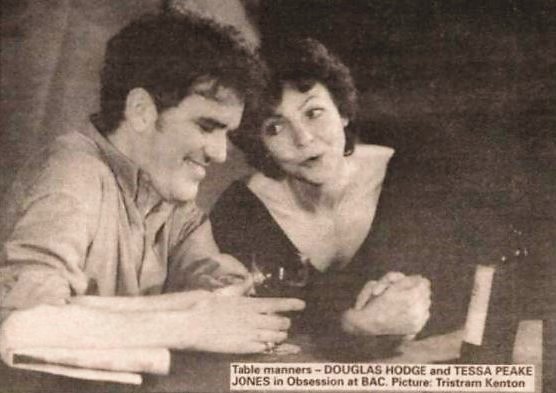
from the 16th-century phrase ‘to set cock a hoop’, ‘to set (the) cock on (the) hoop’, apparently meaning ‘to put the cock (= spigot) on a barrel hoop and let the liquor flow prior to a drinking bout’—‘cock’ later equated with the fowl and ‘hoop’ with French ‘huppe’ (tufted crest)
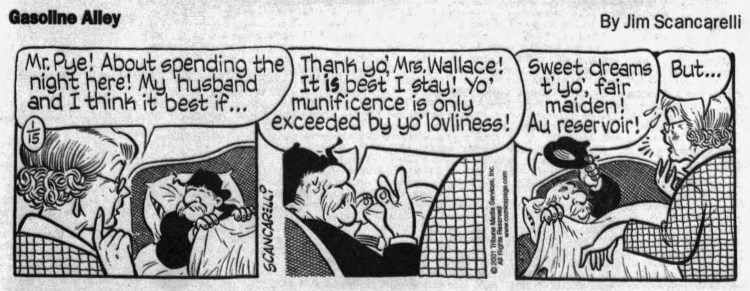
A humorous alteration of ‘au revoir’ after the noun ‘reservoir’, the exclamation ‘au reservoir’ is first recorded in Little Pedlington and the Pedlingtonians (London, 1839), by the English author John Poole (1786-1872).
First attested in 1943, the British-English colloquial phrase ‘to go (all) round the houses’ means ‘to get to the point in a lengthy or roundabout way’, from its literal sense, ‘to take an unnecessarily circuitous route to one’s destination’.
The phrase ‘all behind, like a cow’s tail’ and its variants mean ‘left behind’ and ‘late in accomplishing a task’. They appeared in print in the mid-19th century in the USA, Australia and Britain.
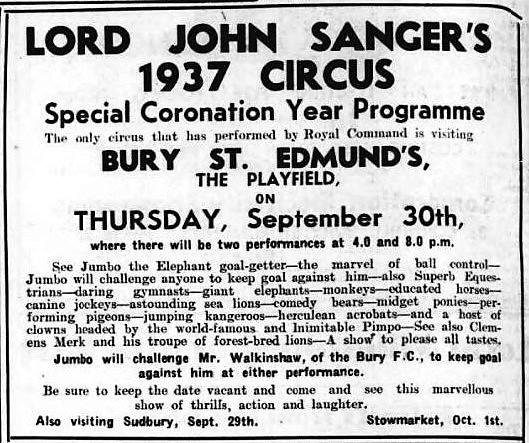
UK, 1937, colloquial—‘to have done something more than oneself (or someone else) has had hot dinners’: used jocularly to emphasise the subject’s wide experience of a particular activity or phenomenon
British English: a drinking tour of a number of pubs or bars—but first appeared in 1909 with specific reference to an organised form of propaganda consisting in sending a person from pub to pub in order to promote the Conservative cause
denotes a situation in which the alternatives are considered equivalent—first recorded, as ‘six of the one and half a dozen of the other’, on 24th April 1790 in the journal of Ralph Clark, a British naval officer—synonym: ‘(as) broad as long’
‘to plough a lonely furrow’, or ‘one’s own furrow’ (UK, 1901): to carry on without help, support or companionship—French ‘creuser son sillon’ (‘to dig one’s own furrow’, first used by Voltaire): to carry out with courage and perseverance the task undertaken
‘dunce’: originally a follower of John Duns Scotus (circa 1265-1308), scholastic theologian; in the 16th century, Scotus’s system was attacked with ridicule by the humanists and the reformers as a farrago of needless entities and useless distinctions
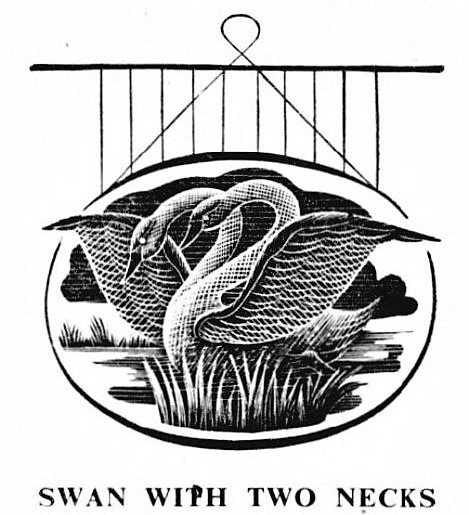
Alteration of ‘the Swan with Two Nicks’—All the Thames swans belong to the Crown, the Vintners’ Company or the Dyers’ Company. A swan with two nicks belongs to the Vintners’ Company, with one nick to the Dyers’ Company, with no nicks to the Crown.