origin of ‘watershed’ as used about British television
UK, 1962—the time after which programmes unsuitable for children are broadcast on television—from the image of a dividing line between two different sorts of programmes
Read More
“ad fontes!”
UK, 1962—the time after which programmes unsuitable for children are broadcast on television—from the image of a dividing line between two different sorts of programmes
Read MoreUK, 1788—denotes an auction in which the price is lowered by stages until a buyer is found—said to have been invented by the Dutch specifically as the best solution to selling tulip bulbs
Read More‘double Dutch’, 19th century—from ‘Dutch’ in the sense of a language that few people can speak, and ‘double’ as a mere intensifier—‘High Dutch’, 17th century—loan translation from French ‘haut allemand’ (= ‘High German’), used in the sense of gibberish
Read MoreUK, 1797—strength or confidence gained from drinking alcohol—alludes to the drinking habits ascribed to the Dutch—one of the phrases in which ‘Dutch’ is used derogatorily, largely because of the enmity between the English and the Dutch in the 17th and 18th centuries
Read MoreUK, 1967—chiefly British—‘bums on seats’: the members of an audience, at a theatre, cinema or other place of entertainment, especially when viewed as a source of income
Read More
1916—from ‘brownie’, i.e. a benevolent elf that supposedly haunts houses and does housework secretly—not from the fact that the uniform of the junior Girl Scouts and Girl Guides is brown
Read More
first recorded in the Los Angeles Times (California) of 15 March 1951—possibly from ‘brownie’ in the sense of ‘a benevolent elf that supposedly haunts houses and does housework secretly’
Read More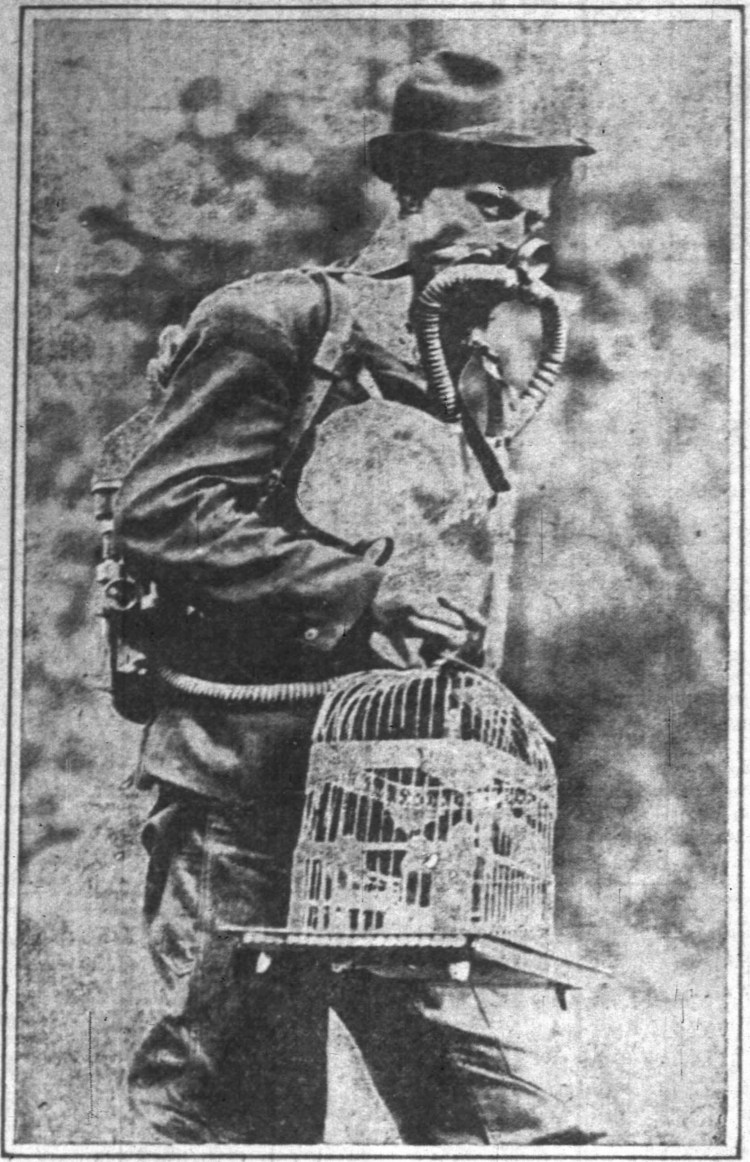
USA, 1964—‘canary in the coal mine’: an early indicator of potential danger or failure—from the former practice of taking live canaries into coal mines to test for the presence of toxic gases, the illness or death of the canaries serving as an indication that such gases were present
Read MoreThe phrase ‘a far cry’ means ‘something very different’. Its literal signification (first recorded in A Legend of Montrose (1819), by Walter Scott) is ‘a long way’, ‘a great distance’. Here, the noun ‘cry’ denotes ‘a calling distance’, as in ‘within cry of’, meaning ‘within calling distance of’.
Read More
‘coward’—from Old-French ‘cuard’, probably referring to a frightened animal with its tail between its legs—from ‘cüe’ (Modern French ‘queue’), ‘tail’, and pejorative suffix ‘-ard’ (cf. ‘bastard’)—‘cowardy, cowardy custard’, alliterative nonsensical children’s phrase (19th century)
Read More
