meaning and evolution of ‘had one but the wheel(s) came off’

UK, 1924—used to indicate that the speaker has been inattentive or has not understood what has just been said
Read More
“ad fontes!”
UK, 1924—used to indicate that the speaker has been inattentive or has not understood what has just been said
Read More
‘WAGs’ (1987): the wives and girlfriends of the players of the Scottish football team Dundee United F.C.—‘Gwags’ (2006): golfers’ wives and girlfriends
Read More
coined in The Saturday Review (London, 13 July 1861) about the shortage of important news in autumn in The Times of London
Read MoreUK, 1862—‘in every direction’ and ‘in a disorganised or confused state’—apparently originated in sports slang
Read More
to put more effort in it—1976 with reference to putting one’s foot down on the accelerator pedal in a motor vehicle
Read Moresexual intercourse conducted quickly and without tenderness—originally used (USA, 1950) in the generic, neutral sense of ‘quickness’
Read More
from the idea that it takes some pluck to put to the test the belief that a nettle stings less painfully when seized tightly than when touched lightly
Read More
the origin of some famous catchphrases used in 19th-century advertising campaigns
Read More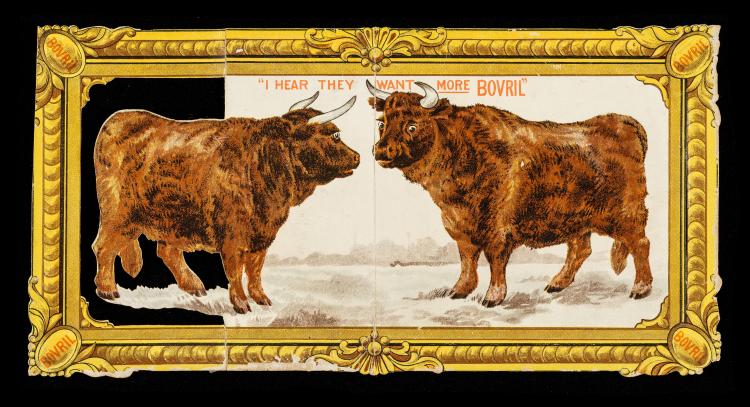
from an advertisement for the concentrated beef extract Bovril, showing a bullock lamenting over a jar of the product
Read MoreUK, 1957—an expression of encouragement, but often used ironically with the opposite meaning—origin unclear
Read More
