early history of the phrase ‘the dog ate my homework’

far-fetched excuse for failing to hand in school homework—1st recorded UK 1929 but had already long been in usage at that time—dog eating a sermon UK 1894
Read More
“ad fontes!”
far-fetched excuse for failing to hand in school homework—1st recorded UK 1929 but had already long been in usage at that time—dog eating a sermon UK 1894
Read More
refers to someone who stands no chance whatsoever in an undertaking—UK, 1880—perhaps originally a line in The World, a drama by Meritt, Pettitt and Harris
Read MoreUK, 1842—theatre: a long pause during the delivery of a speech—refers to the English actor William Macready (1793-1873), who was given to making long pauses
Read More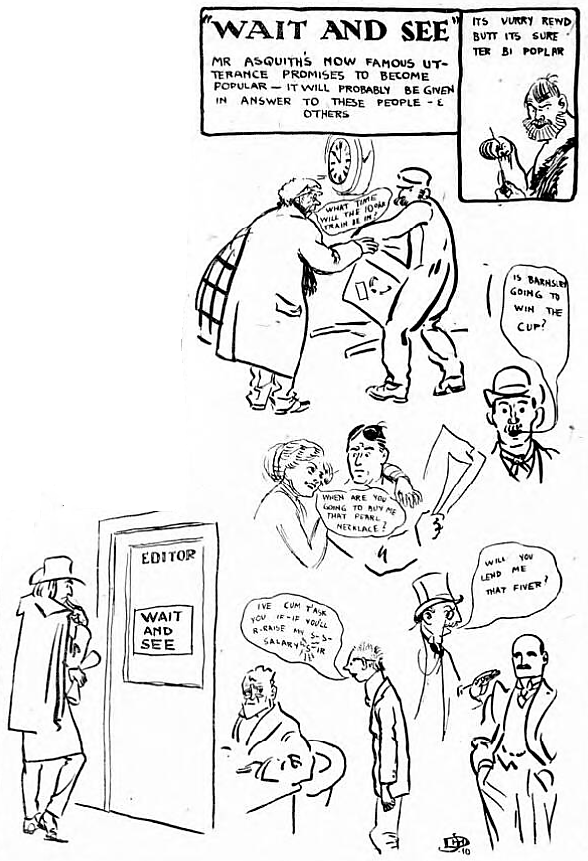
gained currency in 1910 from Prime Minister Asquith’s repeated use in reply to questions in Parliament—hence WWI slang for French matches difficult to ignite
Read Moreevery comforting or hopeful situation has a sad or unpleasant side to it—pessimistic reversal of ‘every cloud has a silver lining’—1900 (already clichéd)
Read MoreBritish and Irish—to spend money as if it were worthless or soon to become so—first (from 1962 onwards) as a misogynistic cliché hammered by the Liverpool Echo
Read More
1941—expresses exasperation or derision at a clumsy, erratic or idiotic person—popularised by Jimmy Clitheroe in his radio programme The Clitheroe Kid (1958-72)
Read More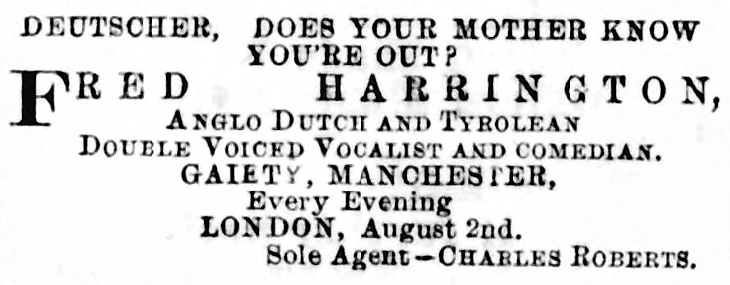
Irish English, 1836—mocking or condescending question addressed to a person whose behaviour is regarded as puerile or inappropriate
Read More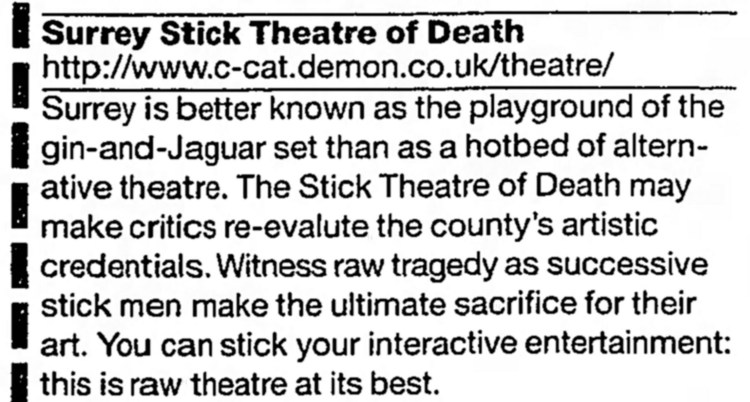
1963—refers to the wealthy English middle-class people, characterised as drinking gin and driving luxury cars such as Jaguars, and to the areas where they live
Read More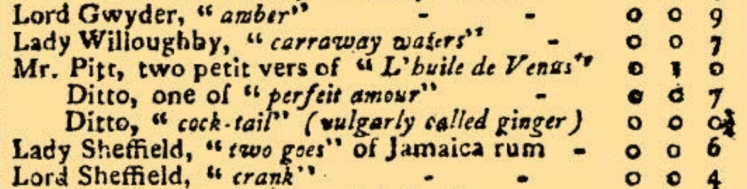
UK, 1798—‘cocktail’ explained as being “vulgarly called ginger”—perhaps from the use of ‘ginger’ to denote a cock with red plumage
Read More
