meaning and origin of ‘to warm the cockles of one’s heart’
late 17th century—probably based on the resemblance between the shape of the heart and that of a cockleshell – or of the body the shell protects
Read More
“ad fontes!”
late 17th century—probably based on the resemblance between the shape of the heart and that of a cockleshell – or of the body the shell protects
Read More1696—perhaps from ‘latet anguis in herba’ (a snake hides in the grass) in Virgil’s Eclogues—cf. ‘a pad [= toad] in the straw’ and French ‘il y a de l’oignon’
Read MoreIn allusion to The Tale of the Ancyent Marinere (1798), by Samuel Taylor Coleridge: the albatross killed by the mariner is hung around his neck as punishment.
Read More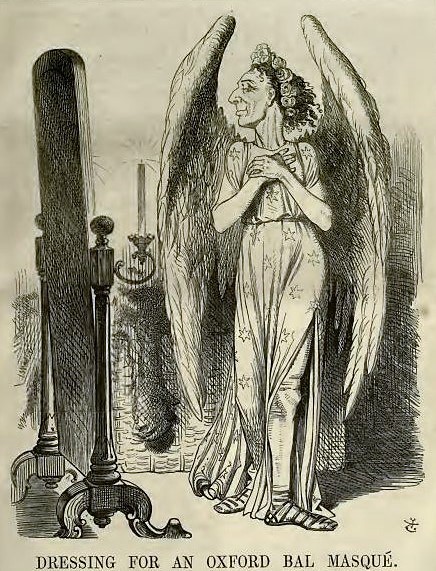
‘on the righteous side’—originally used in 1864 by Benjamin Disraeli to contrast the theory of evolution with the theory of the divine creation of humankind
Read More
‘the answer to a maiden’s prayer’—primary meaning (USA, 1926): ‘an eligible bachelor’—hence, in extended use, ‘a miracle solution’
Read More
The obsolete phrase ‘to lead apes in hell’ expresses the fancied consequence of dying a spinster. Its first know user was George Gascoigne in 1573.
Read More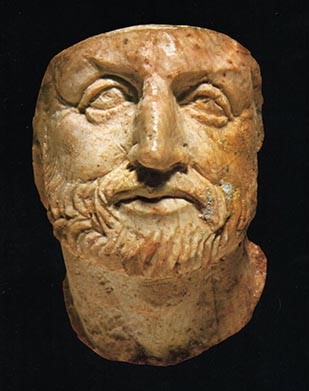
from the story of a woman who, having been unfairly judged by King Philip of Macedon while he was drunk, urged him to reconsider his decision when sober
Read More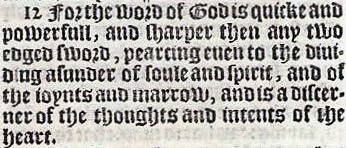
to serve both sides of an argument; to have both good and bad effects—England, early 18th century—refers to a sword which has two cutting edges
Read More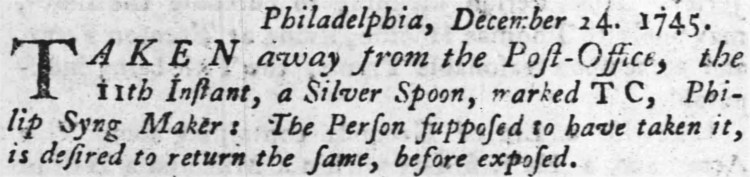
alludes to the gift of a spoon to a child at its christening—1762 as ‘one man is born with a silver spoon in his mouth, and another with a wooden ladle’
Read More
1790—from the name of a Quaker who must prove his identity against an impostor’s claims in ‘A Bold Stroke for a Wife’ (1718), a comedy by Susanna Centlivre
Read More
