This advertisement for the second season (2014) of comedienne Amy Schumer’s sketch show, Inside Amy Schumer, highlighted both the “hot” and “mess” sides of her personality — photograph: Jamey Welch Creative The primary meanings of the noun mess are a serving of food, a course, a meal, a prepared dish of a specified […]
Politicians usually work with blue smoke and mirrors. What appears to be real is mostly an illusion, and what is unlikely turns out to be real. But sometimes, the blue smoke and mirrors don’t work. When you can’t produce a budget, you can’t call a news conference and pretend you did. from The News […]
The term fifth column, which translates Spanish quinta columna, denotes the enemy’s supporters in one’s own country, or a body of one’s supporters in an attacked or occupied foreign country, hence, more generally, any group of hostile or subversive infiltrators, any enemy in one’s midst—synonym: the enemy within. The Spanish Civil War (1936-39) was the […]
Of American-English origin, Simon says denotes a children’s game in which players must obey the leader’s instructions only if they are prefaced with the words Simon says; it also denotes the command itself. The name Simon was probably chosen for alliterative effect (Simon says). —Synonymous phrase: O’Grady says. The earliest instance of the phrase Simon […]
The verb hash, which dates back to the mid-17th century, is from French hacher, meaning to chop, to mince, itself from the feminine noun hache, meaning an axe. (English hatchet is from the diminutive of hache, hachette.) The literal sense of the noun hash is a dish consisting of meat which has been […]
The sandwich (item of food consisting of two pieces of bread with a filling between them) is named after the British statesman John Montagu (1718-92), 4th Earl of Sandwich. It is generally said that the sandwich was invented because he once spent twenty-four hours at the gaming-table without other refreshment than some slices of beef […]
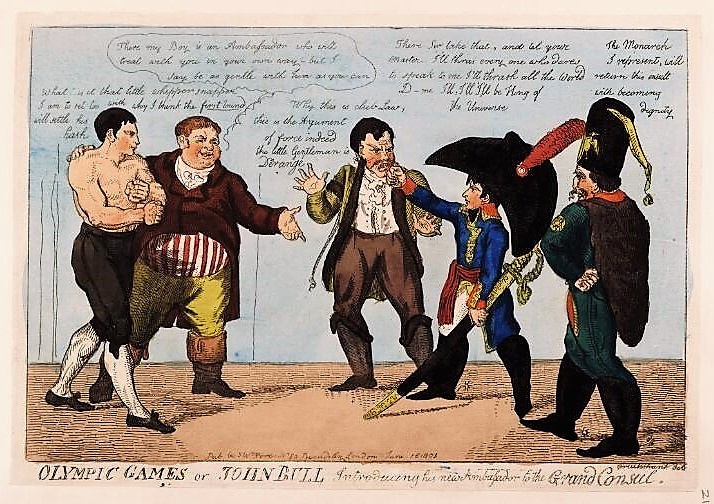
The phrase to steal someone’s thunder means: to use the ideas, policies, etc., devised by another person, political party, etc., for one’s own advantage or to anticipate their use by the originator. It is said to have originated in an exclamation by the English critic and ineffective playwright John Dennis (1658-1734). After the early demise […]
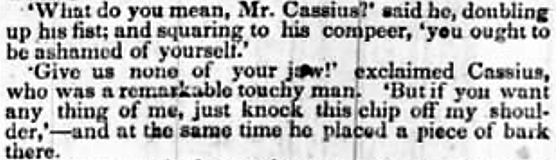
The phrase a chip on one’s shoulder means a challenging or belligerent attitude. In A Concise Dictionary of Phrase and Fable (1993), B. A. Phythian explains: There is an unusual degree of unanimity about the provenance of have a chip on one’s shoulder (bear a grudge; behave anti-socially). Unlikely as it may seem, […]
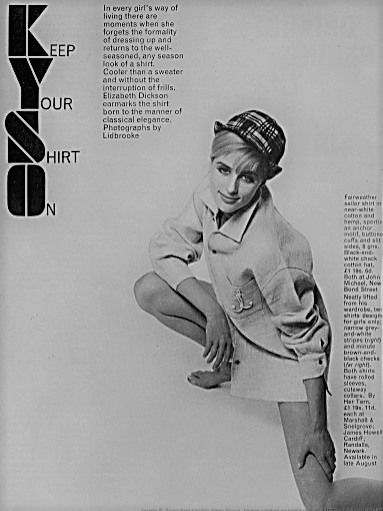
Keep your shirt on In every girl’s way of living there are moments when she forgets the formality of dressing up and returns to the well-seasoned, any season look of a shirt. Cooler than a sweater and without the interruption of frills. Elizabeth Dickson earmarks the shirt born to the manner of classical elegance. advertisement […]
Literally denoting a mouse which lives in a church, the noun church mouse has long been used figuratively and allusively of a person likened to such a mouse, in terms of its proverbial attributes, especially in being impoverished or quiet. For example, the Anglo-Welsh historian and political writer James Howell (circa 1594-1666) recorded the following […]




 word histories