USA, 1946—‘to have, or to get, egg on one’s face’: to be, or to get, embarrassed or humiliated by the turn of events—refers either to having eggs thrown at one’s face or to yolk stains left on the face after the careless eating of a soft-boiled egg
‘handbag’: to bully or coerce by subjecting to a forthright verbal assault or criticism—originally used with reference to British Prime Minister Margaret Thatcher in The Economist (7 August 1982)—from literal meaning ‘to batter or assault with a handbag’
British English—‘Page Three’, or ‘Page 3’: a feature which appeared daily on page three of the British tabloid The Sun (London), and included a pin-up picture of a topless or nude young woman; this feature first appeared on 17 November 1970.
Bing Crosby popularised ‘pennies from heaven’ in the 1936 film and song of the same name, but the phrase already existed; and Abraham Burstein, rabbi and author, had used ‘pennies falling from heaven’ in The Ghetto Messenger in 1928.
Often used in phrases such as ‘to jump on the bandwagon’, meaning to join the popular or apparently winning side, ‘bandwagon’ denotes a popular party, faction or cause that attracts growing support; its primary meaning is a wagon used for carrying the band in a parade.
‘happy-clappy’: a member of a Christian group whose worship is marked by enthusiastic participation; composed of ‘happy’ and of the noun ‘clap’ suffixed with ‘-y’—with allusion to the cheerful singing and hand-clapping regarded as typical of charismatic religious services
First recorded in The Bystander (London) on 24 January 1906, this French phrase means ‘hobby, pastime’; it refers to the passion that the French painter Jean Auguste Dominique Ingres (1780-1867) had for playing the violin.
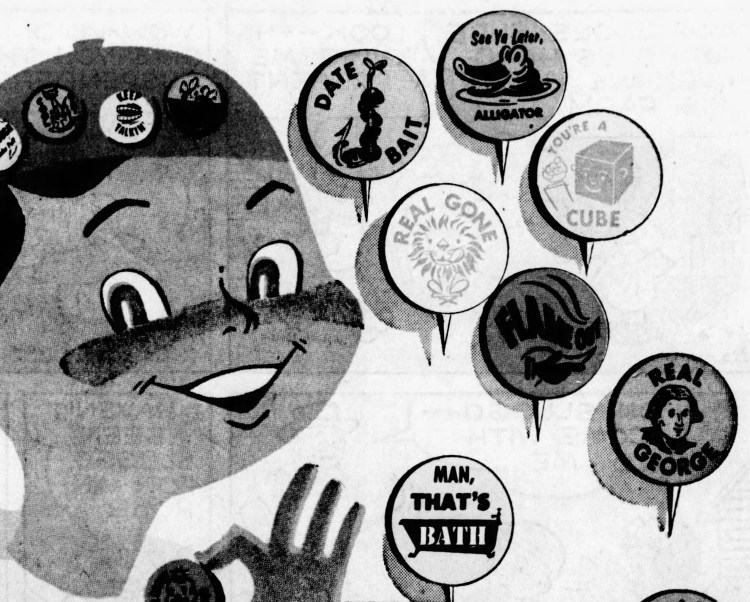
The colloquial see you later, alligator, which originated in American English, is a catchphrase used on parting. The expected response is in, or after, a while, crocodile. —Cf. also notes on ‘see you later, agitator’. The earliest instance of see you later, alligator that I have found is from Teenagers’ Slang Expressions Are Explained by […]
French—from the noun use of the Latin adjective ‘natalis’ (from Christian-Latin ‘natalis dies’, ‘day of birth’), denoting the festival of the nativity of Christ
from ‘Full Fathom Five’, Ariel’s song to Ferdinand in ‘The Tempest’, by Shakespeare, where ‘sea change’ denotes a change brought about by the action of the sea





 word histories