‘singing milkshake’: meaning and origin
1979—nickname given, in particular, to singer Olivia Newton-John—alludes to the type of popular music that (like a milkshake) is discarded as soon as it has been consumed
Read More
“ad fontes!”
1979—nickname given, in particular, to singer Olivia Newton-John—alludes to the type of popular music that (like a milkshake) is discarded as soon as it has been consumed
Read MoreUK, 1938—old-fashioned informal British-English adjective meaning ‘in good order’, ‘fine’—origin obscure: perhaps from Hindi ‘ṭhīk hai’ (‘all right’) or from ‘the ticket’ (‘the correct thing’); or it may simply be a purely fanciful formation
Read MoreUK, 1835—said to a person that the speaker does not wish to see again—refers to Bath, a spa in south-western England, where one goes to take the waters
Read MoreUK, 1788—very drunk—may refer to Chloe, a woman with whom the English poet Matthew Prior (1664-1721) allegedly drank, and whom he often mentioned in his poems
Read MoreUSA, 1937, as a wrestling term—an act of placing both hands on a person’s wrist or arm and then twisting it to produce a burning sensation—alludes to the fiendish methods of torture attributed to the ‘(Red) Indians’
Read More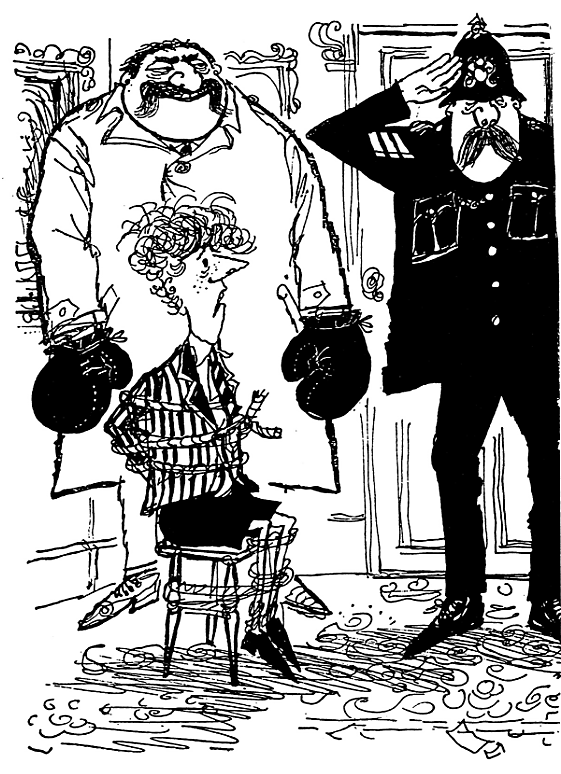
UK, 1956, children’s slang—an act of placing both hands on a person’s wrist or arm and then twisting it to produce a burning sensation—alludes to the fiendish methods of torture attributed to the Chinese
Read MoreUK, 1710—in ease and luxury—refers to the use of clover as fodder, as explained by Samuel Johnson in A Dictionary of the English Language (1755): “To live in Clover, is to live luxuriously; clover being extremely delicious and fattening to cattle.”
Read MoreAustralia—used to express unluckiness or unhappiness—first recorded in The Four-legged Lottery (1958), by Australian novelist Frank Hardy, who later often reused it
Read MoreUK 1945: ‘as lucky as the pox doctor’s clerk’: very lucky—UK 1954, ‘to look like a pox doctor’s clerk’, Australia 1957, ‘done up like a pox doctor’s clerk’: dressed nattily but in bad taste
Read MoreUSA, 1939 in The Grapes of Wrath, by John Steinbeck—a piece of homespun philosophy meaning that a man must do what he feels needs to be done, even if it is dangerous or undesirable
Read More word histories