‘the birds and the bees’: meaning and early occurrences
USA, 1936—the facts about sexual reproduction, especially as explained to a child—when this phrase appeared, ‘birds’ and ‘bees’ had long been commonly paired in literary allusions
Read More
“ad fontes!”
USA, 1936—the facts about sexual reproduction, especially as explained to a child—when this phrase appeared, ‘birds’ and ‘bees’ had long been commonly paired in literary allusions
Read More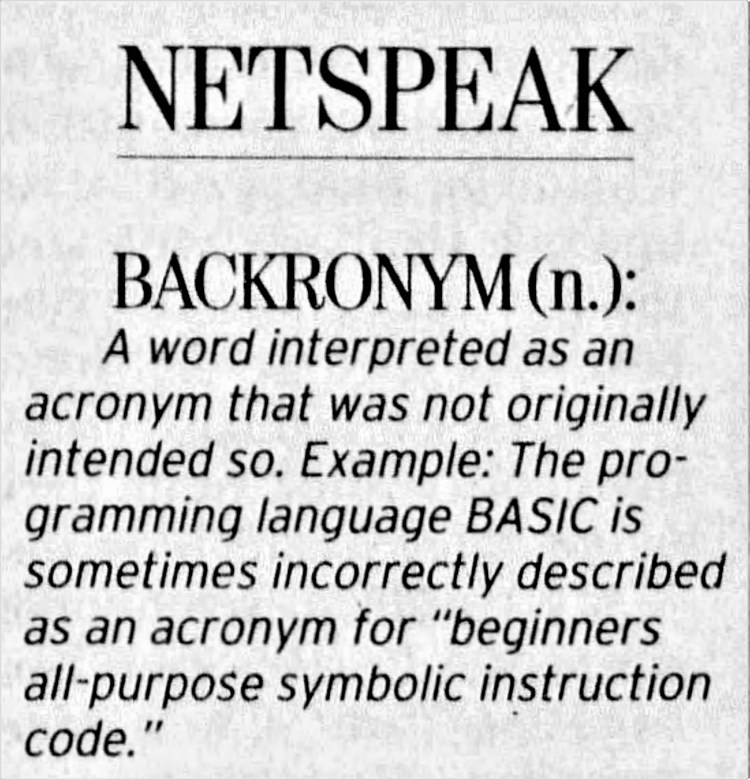
USA, 1983—an acronym deliberately formed from a phrase whose initial letters spell out a particular word or words, either to enhance memorability or as a fanciful explanation of a word’s origin—blend of the adjective ‘back’ and of the noun ‘acronym’
Read MoreAustralia, 1888—denotes a letter (i.e., a written message)—‘yabber’: as a noun, denotes speech, language, talk; as a verb, means to talk—from an aboriginal stem ‘ya’, meaning to speak
Read MoreUK, 1938—old-fashioned informal British-English adjective meaning ‘in good order’, ‘fine’—origin obscure: perhaps from Hindi ‘ṭhīk hai’ (‘all right’) or from ‘the ticket’ (‘the correct thing’); or it may simply be a purely fanciful formation
Read MoreUSA, 1868—coined by U.S. critic Richard Grant White (1822-1885) to denote a word or expression whose original acceptation (preserved in U.S. English) was changed to one that he regarded as debased
Read MoreAustralia, 1964—‘Emma Chisit’: ‘how much is it?’ (allegedly coined by English author Monica Dickens, who reportedly misunderstood the question posed by an Australian)—‘Strine’: Australian pronunciation of ‘Australian’ (coined by Australian author Alistair Morrison)
Read MoreAustralia, 1941—used of any adverse situation—based on the rhyme between ‘crook’ (meaning ‘bad’, ‘unpleasant’, ‘unsatisfactory’) and ‘Tallarook’, the name of a town in Victoria—sometimes followed by ‘there’s no work in Bourke’
Read MoreFrance, 1891; UK, 1908—a sandwich filled with ham and cheese, and toasted or grilled—from ‘croque’, conjugated form of the verb ‘croquer’, to bite, to crunch, and the noun ‘monsieur’ (the reason that this noun was chosen is unknown)
Read MoreUSA, 1925—With, of course, a pun on ‘pee’, meaning ‘to urinate’, the jocular phrase ‘silent like (the) ‘p’ in swimming’ is used when exposing a difficulty in pronunciation.
Read More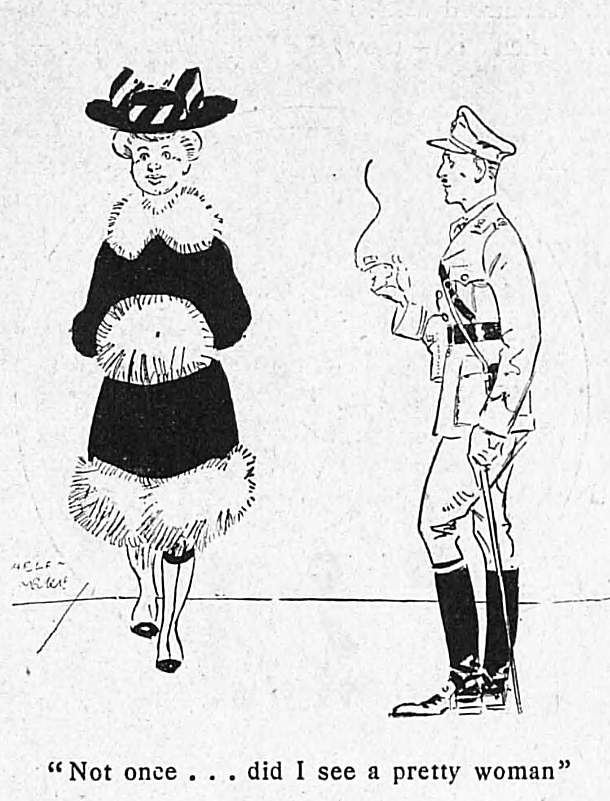
a deliberate malapropism punning on ‘to cast aspersions on’—UK, 1902—nasturtiums are low plants with large round leaves and orange, red or yellow flowers
Read More
