the biblical origin of the phrase ‘the straight and narrow’
‘The straight and narrow’: allusion to the Sermon on the Mount. ‘Straight’ is an alteration of ‘strait’, meaning ‘so narrow as to make transit difficult’.
Read More
“ad fontes!”
‘The straight and narrow’: allusion to the Sermon on the Mount. ‘Straight’ is an alteration of ‘strait’, meaning ‘so narrow as to make transit difficult’.
Read MoreThere can be some astonishing differences between the biblical texts belonging to the scholastic tradition and those belonging to the humanist movement.
Read MoreThe word ‘slave’ is from Medieval Latin ‘Sclavus’, ‘Slav’, because the Slavic peoples were frequently reduced to a servile condition by the Germanic conquest.
Read MoreThe verb ‘sneeze’ is an alteration of the obsolete verb ‘fnese’ due to misreading or misprinting it as ‘ſnese’ (= ‘snese’).
Read More
‘(As) mad as a March hare’ refers to the fact that, in the breeding season, the hare is characterised by much leaping, boxing and chasing in circles.
Read More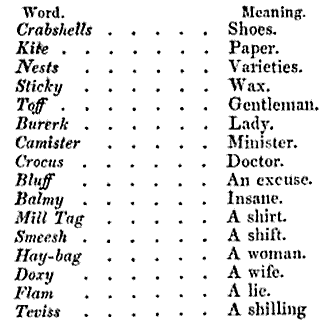
A ‘barmy’ person has a ‘frothy top’, insubstantial brains, from ‘barm’, the froth that forms on the top of fermenting malt liquors.
Read More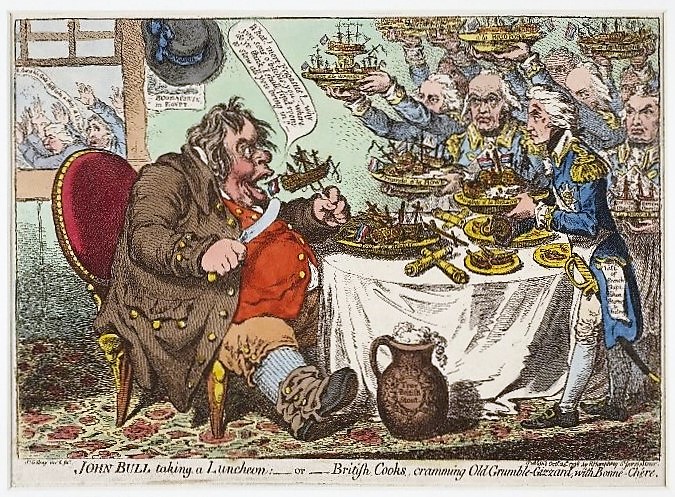
John Bull taking a Luncheon:—or—British Cooks, cramming Old Grumble-Gizzard, with Bonne-Chère. hand-coloured etching by James Gillray, published on 24th October 1798 — © Trustees of the British Museum This print was published just after Nelson’s victory at the Battle of the Nile. He is shown in the forefront of British admirals and naval heroes, serving up […]
Read More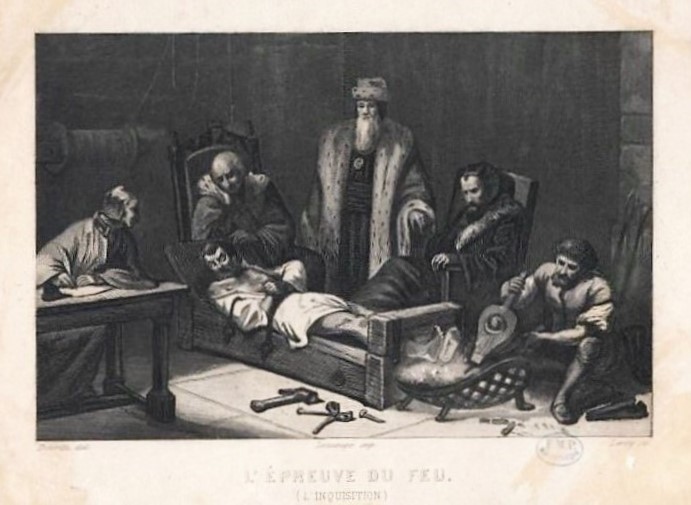
L’épreuve du feu (l’inquisition) by Devritz (painter) and Leroy (engraver) – date unknown source: BIU Santé The original meaning of the noun ordeal, from Old English ordāl, ordēl, is: an ancient test of guilt or innocence by subjection of the accused to severe pain, survival of which was taken as divine proof […]
Read MoreThe noun clue appeared as a variant spelling of clew, of same pronunciation. Not frequent until the 17th century, clue has become the prevailing form of the word in the sense of a fact or idea that serves to reveal something or solve a problem. The word is from Old English cliwen, cleowen, meaning a ball formed by winding yarn, twine or thread (it is still one […]
Read Moreadvertisement for Blotto brothers’ triporteurs Le Jardin des Modes nouvelles – 15th October 1913 The adjective blotto, which means drunk [however, cf. note 1], originated in British military slang during the First World War. It is first recorded in this sense in the chapter Slang in a War Hospital of Observations of an Orderly: […]
Read More word histories