meaning and origin of the phrase ‘alarums and excursions’
confused activity and uproar—alludes to the frequent collocation of ‘alarum’ and ‘excursion’ in stage directions in Shakespearean drama
Read More
“ad fontes!”
confused activity and uproar—alludes to the frequent collocation of ‘alarum’ and ‘excursion’ in stage directions in Shakespearean drama
Read MoreThe Guardian, UK, 23 May 1978—used by one Lionel Bloch to designate—and denounce—the rhetoric employed by the advocates of the communist regimes
Read More1825, Anglo-Irish alteration of ‘by Jesus’—1867 as one word—‘the bejesus out of’ (1931) intensifies the action conveyed by the preceding verb
Read MoreWhy is the element one in words such as alone and only not pronounced like the numeral one? Both the indefinite article an (a before consonant) and the numeral one are from Old English ān—which has survived in Scotland as ane, used both as indefinite article and as numeral. This Old-English word ān meant a/an, one, […]
Read More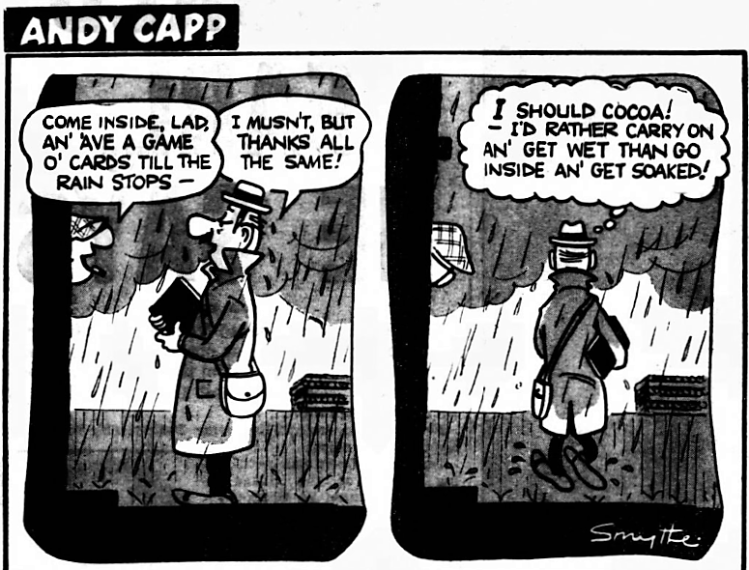
UK slang, 1936—emphatic agreement, though often ironical—‘cocoa’ is said to be rhyming slang for ‘so’ in ‘I should say so’
Read More
Fundamentally, I object to the will of any group to artificially modify language in order to impose their world view.
Read More‘robe’ originally denoted something that has been robbed—French ‘voler’ (‘to fly’) has come to mean ‘to steal’ via falconry
Read More
Scotland, 1914: ‘buroo’, informal form of ‘bureau’ (generic sense)—later used specifically in the sense of Labour Bureau, hence of unemployment benefit (1921)
Read MoreUSA, 1889—humorous, informal: a hen’s egg—composed of ‘cackle’, the raucous clucking cry given by a hen, especially after laying an egg, and of ‘berry’
Read MoreUSA, 1931—presented as being of French origin, but French earliest known uses, in 1933, are from American English
Read More word histories