‘to give someone furiously to think’: meaning and origin
to set someone thinking very hard or seriously, to give someone much food for thought—UK, 1889—loan translation from French ‘donner furieusement à penser’
Read More
“ad fontes!”
to set someone thinking very hard or seriously, to give someone much food for thought—UK, 1889—loan translation from French ‘donner furieusement à penser’
Read Moreto muster up all one’s courage—UK, 1830—probably a calque of the French phrase ‘prendre son courage à deux mains’
Read Morethe political, military or economical threat regarded as being posed by certain peoples of South-East and East Asia, especially the Chinese and the Japanese—UK, 1895—loan translation from French ‘péril jaune’
Read Moresoldiers regarded simply as material to be expended in war—‘cannon fodder’ (1847), said to have been coined after German ‘Kanonenfutter’—French ‘chair à canon’ (1814), first used in reference to Napoléon Bonaparte
Read Morealso ‘no joy without annoy’—meaning: there is a trace of trouble or difficulty in every pleasure—was already a common proverb in the late sixteenth century
Read MoreAustralia, 1927—alteration of ‘blanc’ in French ‘vin blanc’ (‘white wine’)—via rhyming slang forms such as ‘plinketty-plonk’, from phrases such as ‘vin blank’ in the slang of soldiers stationed in France during WWI
Read Moretap-water likened to a grand cru—in reference to ‘château’ in names of wines of superior quality—in French ‘Château-la-Pompe’ (i.e. ‘Château-the-Pump’), ‘pompe’ denotes a device for raising water
Read MoreUK, 2022— translates French ‘girouette de fer’—a derisive nickname for Liz Truss, in reference both to ‘Iron Lady’ (a nickname for Margaret Thatcher) and to Liz Truss’s changing views on a variety of subjects
Read More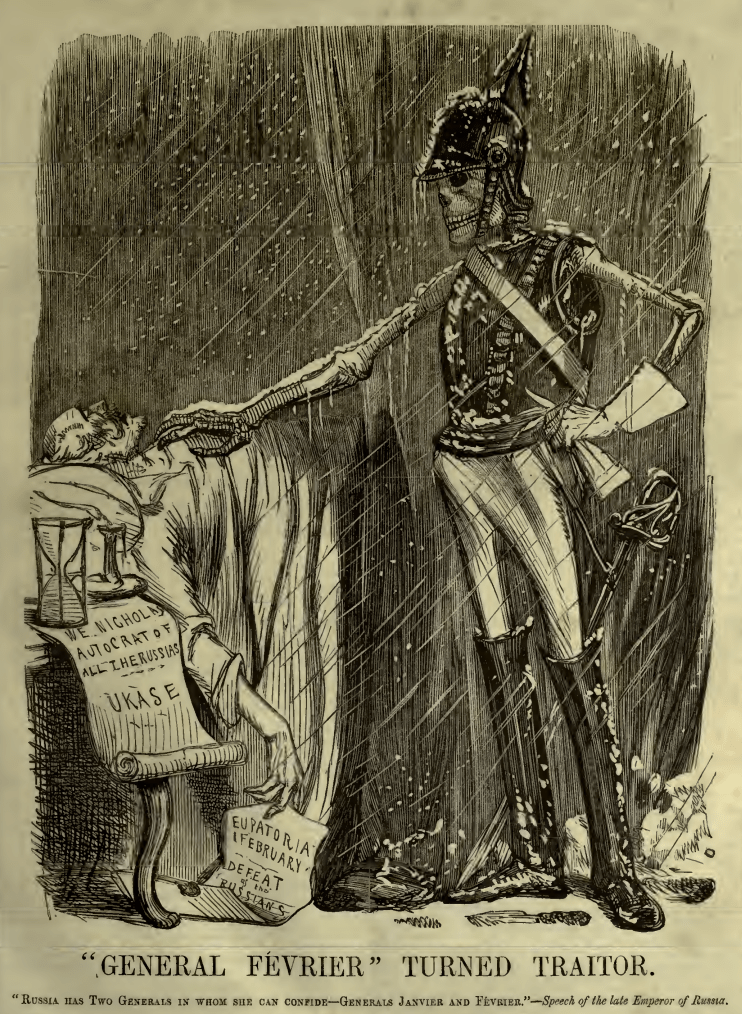
personify January and February as army commanders, especially in reference to winter as detrimental or destructive to a military campaign—apparently coined by Russian Prince Alexander Menshikov in 1855, during the Crimean War
Read Morepersonifies the winter season as an army commander, especially in reference to winter as detrimental or destructive to a military campaign—UK, 1777, in reference to the War of American Independence
Read More word histories