UK, 1992—coined by Alan Clark during the Matrix Churchill trial—variant of ‘to be economical with the truth’, meaning: to deceive people by deliberately not telling them the whole truth about something
UK, 1894—a love-relationship in which one member of a married couple is involved with a third party—loan translation from French ‘triangle éternel’, coined by Alexandre Dumas fils in L’Homme-Femme (1872), a pamphlet about a wronged husband’s right to take the life of his adulterous wife
‘cauliflower ear’ (USA, 1887)—French calque ‘oreille en chou-fleur’ (1913)—an ear permanently deformed as a result of injuries from repeated blows, as in boxing
1923: a small garment worn to cover the genitals—hence (1926): anything intended to conceal something regarded as shameful or indecent—from French ‘cache-sexe’, from ‘cacher’ (to hide) and ‘sexe’ (sex, genitals)
1815—inner ruthlessness and determination disguised in outward gentleness and courtesy—loan translation from French ‘une main de fer dans un gant de velours’ (1814)
USA, 1831—very rare—since the late 17th century, the expression ‘hen’s teeth’ has been used as a type of something which is extremely rare, unattainable or non-existent
humorous variant of ‘one man’s meat is another man’s poison’—Australia, 1872—used in particular of the opposition between flesh-eating and fish-eating in relation to the religious observance of fasting
a woman’s topless swimsuit, consisting of the lower half of a bikini—from the prefix ‘mono-’ and ‘-kini’ in ‘bikini’, reinterpreted as containing the prefix ‘bi-’—coined in 1946 by French clothing designer Louis Réard
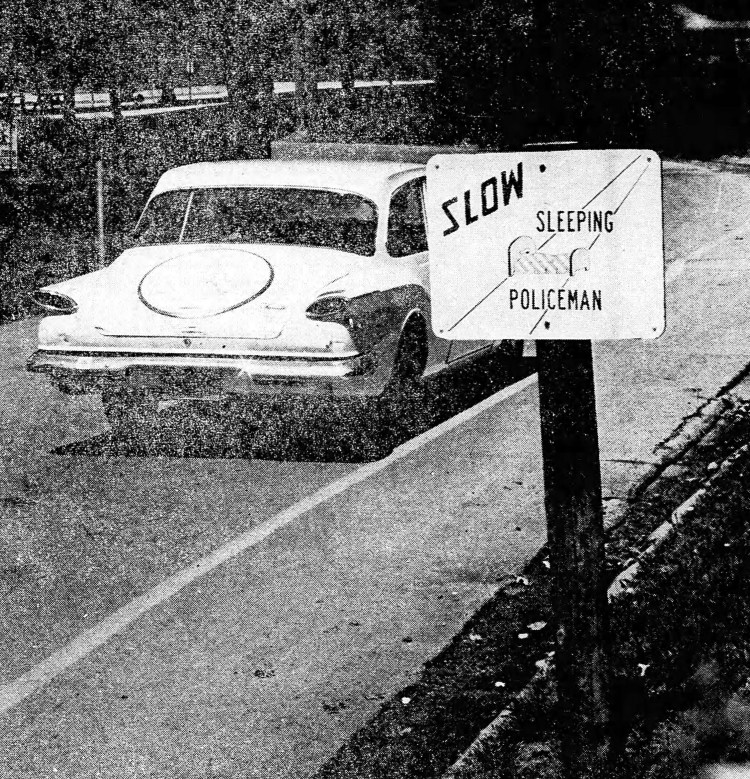
a raised band across a road, designed to make motorists reduce their speed—1961—based on the image of a policeman lying asleep in the middle of a road—in early use often with reference to Jamaica
In French, the concept of dependency underlies the semantic distribution of some basic lexical items: the female is strictly defined in her relation of dependency to the male, as a daughter or as a spouse.