the curious case of the French word ‘oignon’

Decided by the Académie française, the erroneous spelling ‘oignon’ (= ‘onion’) has become a symbol of prejudiced people, ignorant of the history of their own language.
Read More
“ad fontes!”
Decided by the Académie française, the erroneous spelling ‘oignon’ (= ‘onion’) has become a symbol of prejudiced people, ignorant of the history of their own language.
Read Moreearly 18th century, in Jonathan Swift’s ‘Polite Conversation’—from the folk belief that one shudders when somebody walks over the site of one’s future grave
Read More
to die; to be lost or destroyed; to meet with disaster—1914, Army slang—probably from the notion of the setting sun symbolising disappearance or finality
Read More
‘cheese-eating surrender monkeys’: the French people (USA, 1995) from The Simpsons—‘tea-drinking surrender monkeys’: the British people (Ireland, 2004)
Read More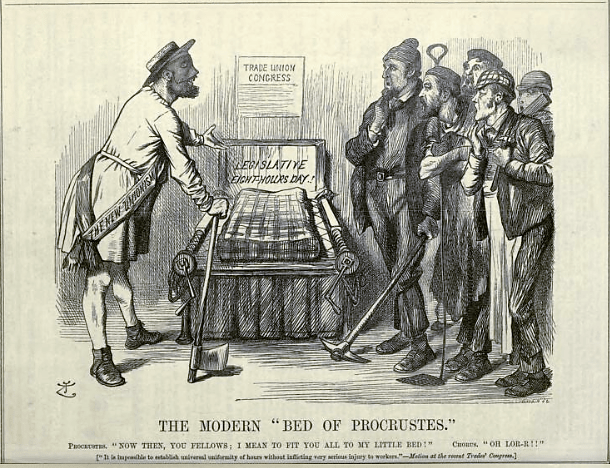
a means of enforcing conformity—Greek mythology: Procrustes was a robber who made his victims fit a bed by either stretching them longer or cutting them shorter
Read Morenot originally coined because of the connotation of explosiveness, but because of the connotations of pleasure, beauty and tininess
Read MoreUSA, 1802 and 1851—translations from German—apparently from the idea that the area behind the ears is the last part to become dry after birth
Read More1735, as ‘armed up to the very teeth’ in a translation of Alain-René Lesage’s Histoire de Gil Blas de Santillane
Read Moreconfused activity and uproar—alludes to the frequent collocation of ‘alarum’ and ‘excursion’ in stage directions in Shakespearean drama
Read Morefirst attested in David Balfour (1893), by Robert Louis Stevenson—French equivalent ‘connaître comme sa/ses poche(s)’ (‘to know like one’s pocket(s)’ – 1791)
Read More word histories