The first ‘public enemy number one’ was Al Capone.
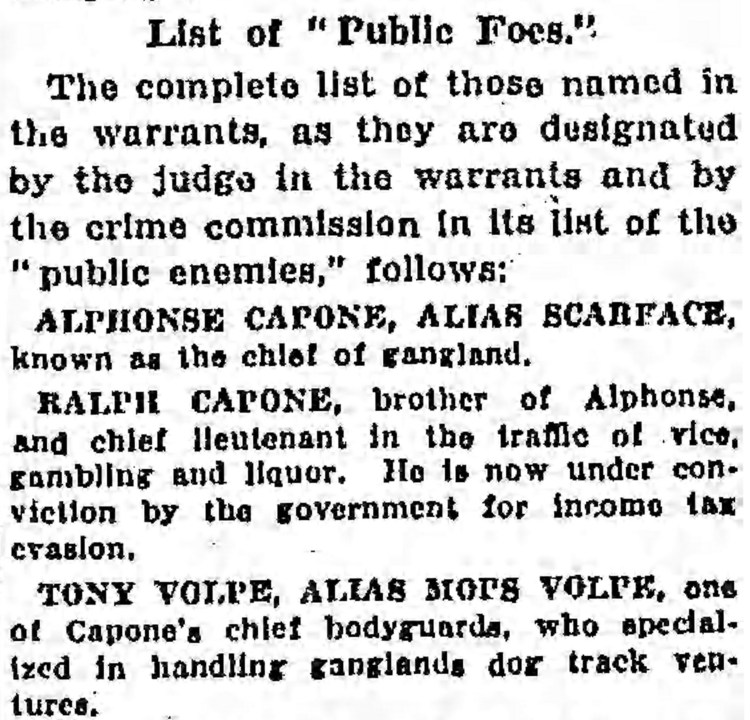
origin: the American gangster Al Capone was number one on the list of 26 ‘public enemies’ drawn up in 1930 by the Chicago crime commission.
Read More
“ad fontes!”
origin: the American gangster Al Capone was number one on the list of 26 ‘public enemies’ drawn up in 1930 by the Chicago crime commission.
Read More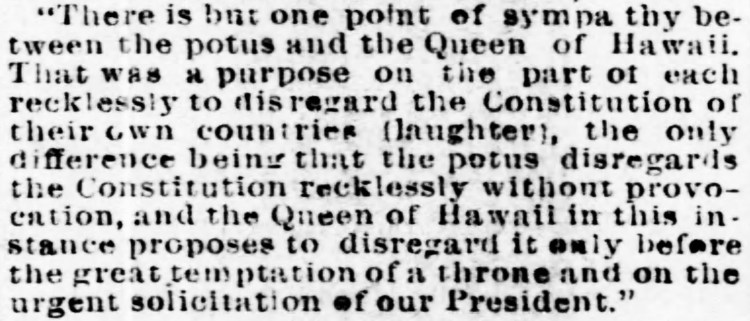
late 19th century—‘POTUS’ was originally an abbreviation used in the Phillips code, a telegraphic code created in 1879 by Walter P. Phillips (1846-1920).
Read More
USA, early 19th century—‘small potatoes’: person or thing considered petty, unimportant, insignificant or worthless
Read More
US, 1830s—a friction match; a radical faction of the Democratic Party—during a meeting, they lit candles with loco-foco matches when the lights were turned off
Read More
Since WWI, ‘Franglais’ has been coined to denote: French spoken by an Anglophone, English spoken by a Francophone and French speech using English words.
Read More
a sweet smell produced when rain falls on parched earth—1964; literally ‘tenuous essence derived from rock or stone’, from Greek ‘petro’ and ‘ichor’
Read Moremid-19th cent.—perhaps from a specific application of the general term of abuse ‘Frog’, aided by the shared initial consonant cluster in ‘French’ and ‘frog’
Read More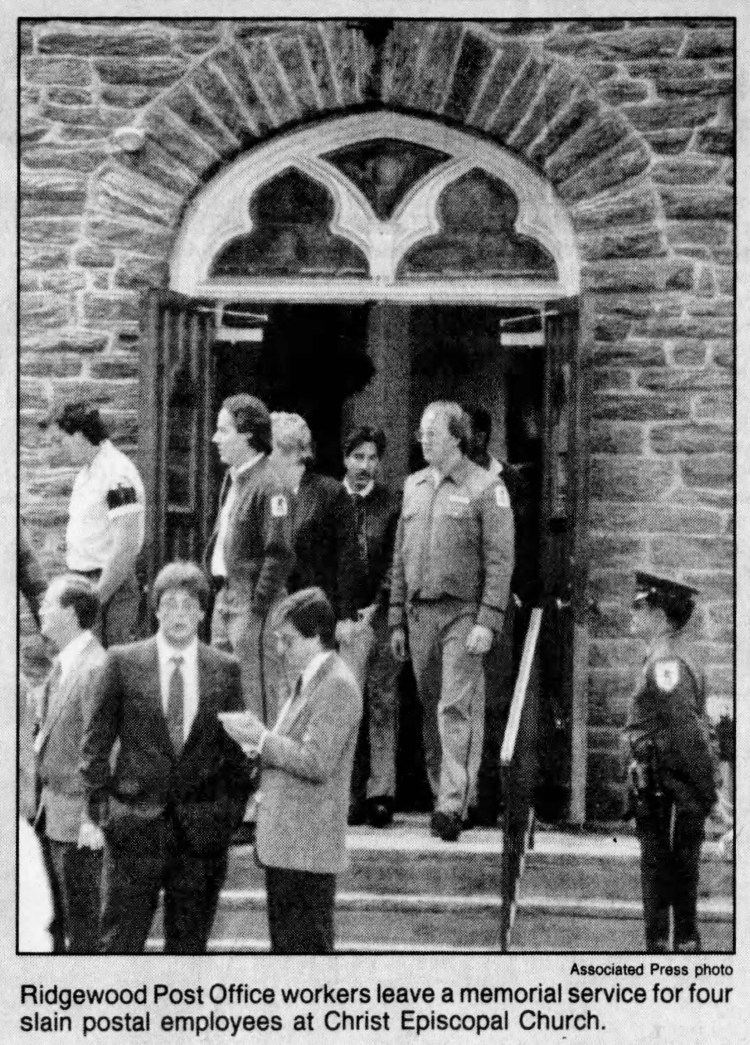
‘to go postal’: to go mad—US, early 1990s—owes its origin to several recorded cases in which employees of the U.S. Postal Service have shot at their colleagues
Read More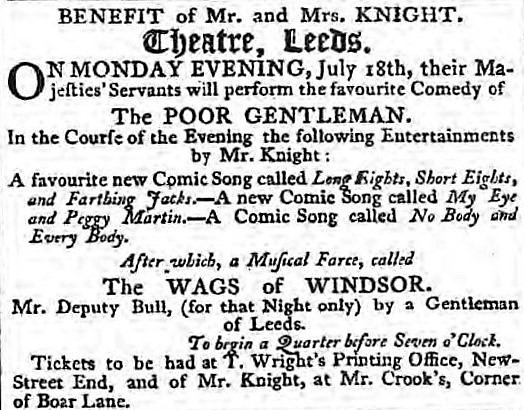
second half of the 18th century—a mere fanciful extension of ‘all my eye’—maintained in a sort of artificial life by persistent conjectures about its origin
Read More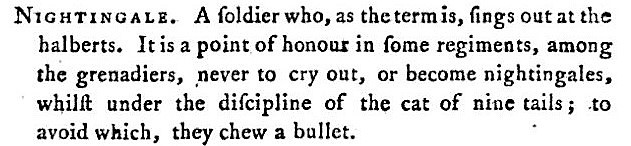
late 19th century—from the practice consisting, for a soldier, in biting on a bullet when being flogged
Read More word histories