‘stop the world, I want to get off’: meaning and early occurrences
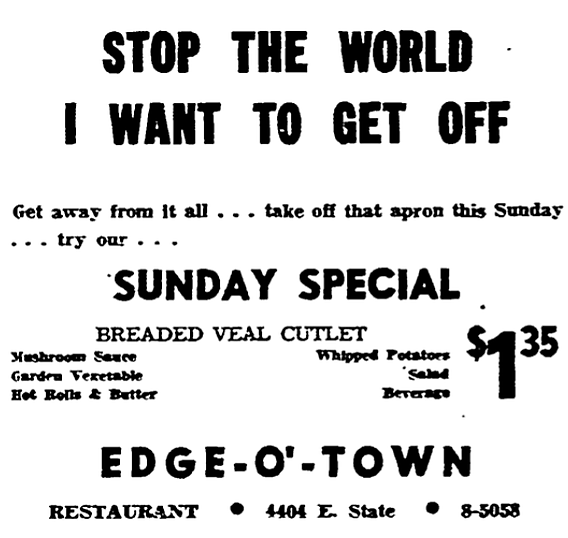
I’m tired of life (but intended serio-ironically, not in genuine despair)—USA 1951, UK 1956—popularised by ‘Stop the World—I Want to Get Off’, a 1961 British musical
Read More
“ad fontes!”
I’m tired of life (but intended serio-ironically, not in genuine despair)—USA 1951, UK 1956—popularised by ‘Stop the World—I Want to Get Off’, a 1961 British musical
Read More
1894—(depreciative) someone who has a controlling influence over another—from the name of the hypnotist under whose spell Trilby falls in ‘Trilby’ (1894), by George Du Maurier
Read Moreindicates that a person has returned to normal after an illness or similar episode—from The Tragical History of King Richard III (1700), an adaptation of Shakespeare’s Richard III by Colley Cibber
Read Moreexceedingly busy—USA, 1906—chiefly in the extended form ‘as busy as a one-armed paper hanger with the hives’
Read MoreUK—applied to dark clouds looming—originally (1927) ‘over Will’s mother’s’ denoted the west—origin unknown
Read More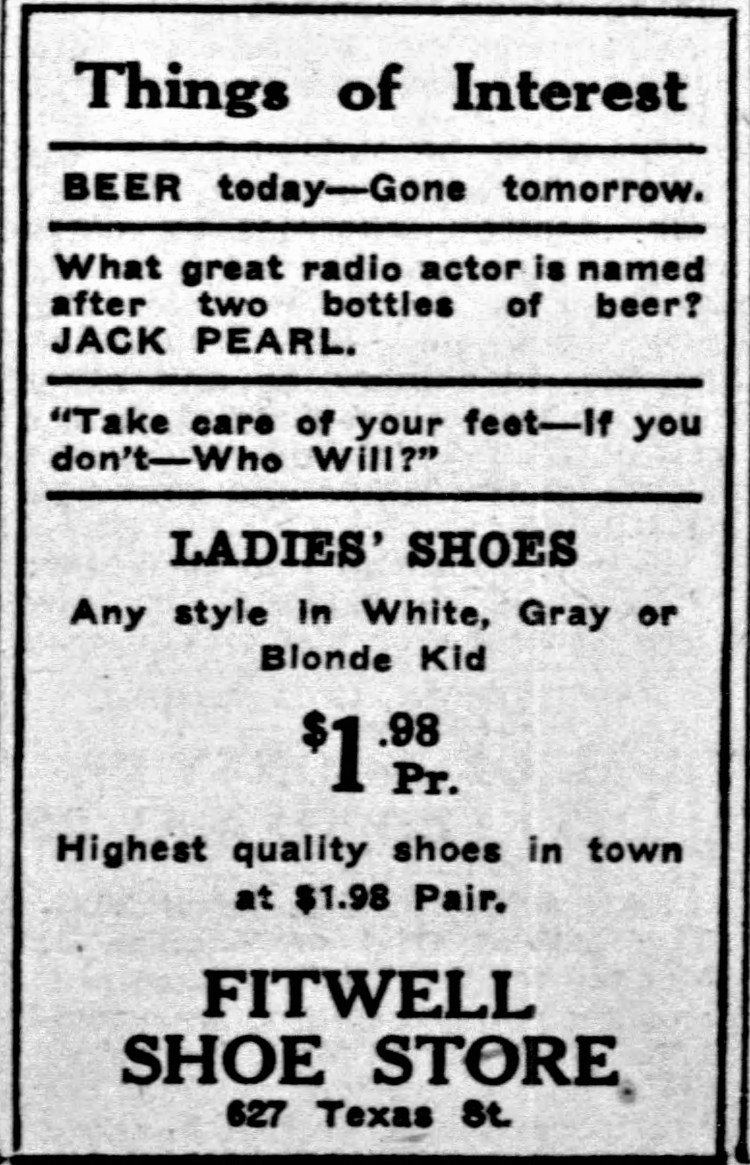
USA, 1931—jocular variant (coined on separate occasions by various persons, independently from one another) of ‘here today (and) gone tomorrow’
Read More‘anything for a quiet wife’ (1875)—jocular variant of ‘anything for a quiet life’ (ca. 1620), which expresses concession or resigned agreement, to ensure one is not disturbed
Read More1970—British and Irish English—acronym from the phrase ‘all coppers are bastards’—customarily written (tattooed in particular) rather than spoken
Read More1955—originated in stage plays purporting to depict life in northern England, particularly in Lancashire—‘mill’: a factory
Read Moreto praise oneself—first used by Benjamin Franklin in 1729—the image is that, when one’s trumpeter is dead, one is forced to find one’s own trumpet
Read More word histories