Australia, 1865—to be less of a fool than one appears to be—this phrase plays on two uses of the adjective ‘green’: 1) denoting the colour of growing vegetation, grass, etc. 2) denoting an inexperienced or naive person
Australia, 1998—a pair of short, tight-fitting men’s swimming trunks—refers to the appearance of the male genitals in figure-hugging trunks—‘budgie’: colloquial abbreviation of ‘budgerigar’, denoting a small Australian parrot
used of a buck-toothed person—USA, 1933, as ‘can eat an apple through a picket fence’—USA, 1950, as ‘can eat an apple through a tennis racquet’—UK, 1979, as ‘can eat an apple through a letter box’
Australia, 1887—a forlorn hope, no prospect whatever—may refer to the British convict William Buckley (1780-1856), who escaped from custody in 1803 and lived for thirty-two years with Aboriginal people
UK and USA, 1816—to tell a long, far-fetched story—of nautical origin? (perhaps alludes to making ropes from lengths of yarn on board ship: the men would have told one another stories while performing this long and tedious task)
1992—the culture shock experienced by an individual (typically a Japanese) who, when visiting, or living in, Paris, realises that this city does not fulfil their idealised expectations—apparently a loan translation from Japanese ‘Pari shōkōgun’, coined by Japanese psychiatrist Hiroaki Ōta
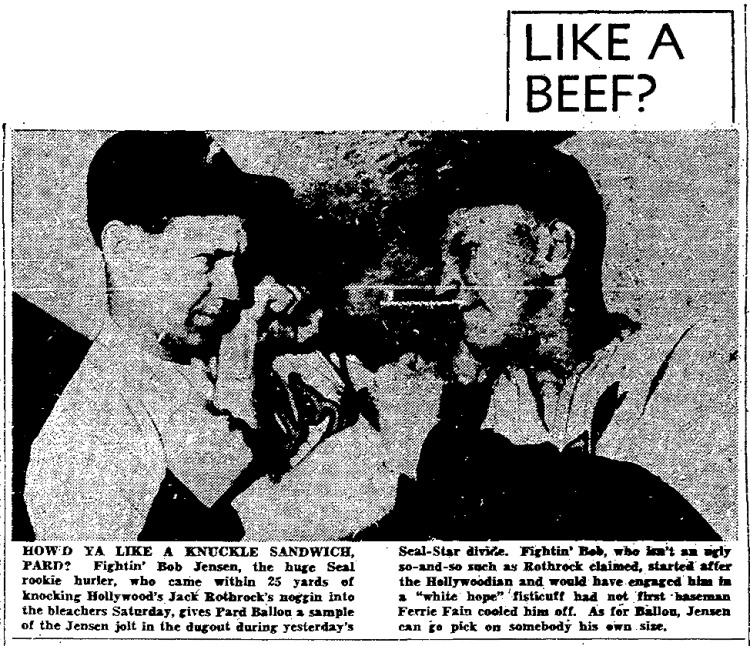
‘knuckle-sandwich’ USA, 1940—‘knuckle-butty’ UK, 1972—a punch to the mouth (or to the stomach)—the image is of a sandwich of knuckles being forced into the mouth (or into the stomach) of the person who is punched
a dentist—World War Two—slang of the British armed forces—was soon adopted into (and came to be regarded as) Australian English—earlier synonyms: ‘fang-faker’ and ‘fang-wrencher’
Australia, 1909—(horseracing) a bet is sure to pay off; (in extended use) something is a very strong probability—from the notion that the punter is so confident of winning the bet that he is prepared to put the whole city of London on a horse to win a brick, i.e., a ten-pound note
USA, 1906: a person who advocates equality for all people at a high level of prosperity (i.e., who believes in champagne for everybody)—UK, 1956: a person who espouses socialist ideals while enjoying a wealthy lifestyle



 word histories