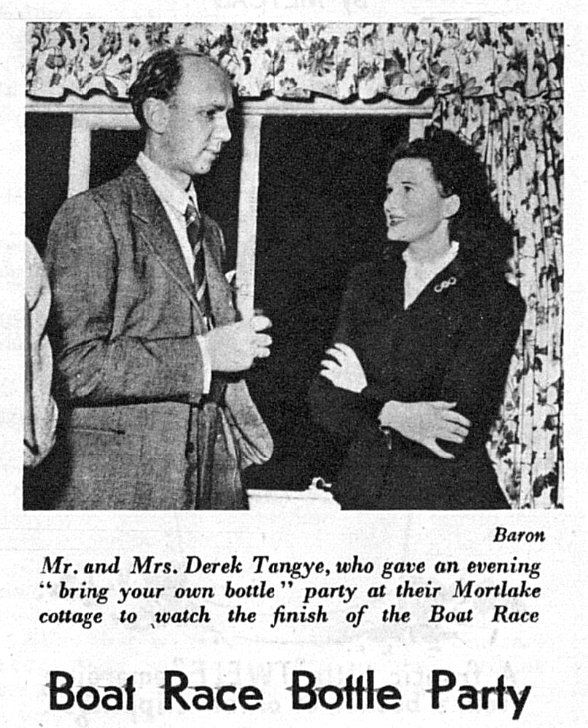
a party to which attendees are encouraged to bring their own drinks, especially alcohol—‘bring-your-own-bottle party’: USA, 1923, in the context of Prohibition—‘bring-a-bottle party’: UK, 1928
Australia, 1986—used as an assurance that all is fine, or to express one’s agreement or acquiescence—euphemistic alteration, with switching of the initial consonants, of ‘no fucking worries’
UK, 1894—a love-relationship in which one member of a married couple is involved with a third party—loan translation from French ‘triangle éternel’, coined by Alexandre Dumas fils in L’Homme-Femme (1872), a pamphlet about a wronged husband’s right to take the life of his adulterous wife
New Zealand (1890) & Australia (1891)—to terrify somebody—probably modelled on the earlier phrase ‘to knock seven bells out of somebody’ (‘to give a severe beating to somebody’)
Ireland, 1891—used in negative contexts to denote rejection, especially in ‘not for all the tea in China’, meaning ‘not in any circumstances’—refers to China as a major producer of tea, and to tea as a commodity of great value
1894—in Australian English, the noun ‘bandicoot’, which designates an insectivorous marsupial native to Australia, has been used in numerous similes denoting deprivation or desolation
Australia, 1976—used by Aborigines to depreciatively designate unemployment or welfare benefits—‘sit-down’ means: performed or obtained while sitting down, with the implication that no or few efforts are required
Australia, 1932: to attract unwelcome attention or criticism—originally, WWI slang: to draw artillery fire from the enemy, in reference to crab shells, used with punning allusion to artillery shells
Australia—in Australian Rules football: used as a call to discourage or distract a player in a rival team attempting to kick for goal—more widely: used to deride a person or organisation deemed to be performing poorly, or to wish someone bad luck—‘chewy’ = ‘chewing gum’

 word histories